
Lead Author
Institution
Published
Abstract
Every door opening changes lab freezer temperature recovery time, directly affecting sample integrity, workflow stability, and compliance decisions. For researchers, operators, and procurement teams comparing cold-chain performance alongside metrics like cell counter viability accuracy, spectrophotometer wavelength accuracy, and automated pipetting cv (coefficient of variation), understanding recovery behavior is essential to choosing reliable equipment and reducing operational risk.
In practical terms, frequent or prolonged door openings can significantly extend freezer recovery time, increase temperature excursions, and expose sensitive materials to avoidable thermal stress. For laboratories, hospitals, biobanks, and life science facilities, this is not just an equipment behavior issue—it is a risk management, quality assurance, and purchasing decision factor. The most important question is not simply whether a freezer gets cold again, but how fast, how consistently, and under what operating conditions it recovers after real-world access events.
Why door openings matter more than many teams expect
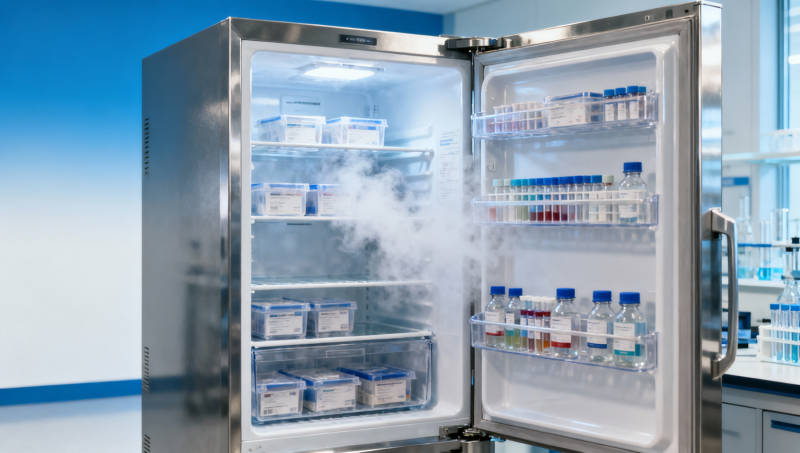
When a freezer door is opened, warm ambient air enters the chamber and cold air escapes. This exchange seems brief, but the impact can be substantial, especially in upright freezers, high-traffic laboratories, and facilities with variable room temperatures. The internal temperature does not return to setpoint instantly. Instead, the system enters a recovery phase during which the compressor, airflow design, insulation, door seal integrity, and load arrangement all influence how quickly stable conditions are restored.
For end users and technical evaluators, the key issue is that recovery time directly affects stored product protection. Biological samples, reagents, vaccines, enzymes, controls, and other temperature-sensitive materials may experience cumulative stress from repeated exposure. Even if the average cabinet temperature appears compliant over time, repeated short excursions can compromise consistency, traceability, and confidence in results.
This is why freezer recovery time should be assessed as a performance characteristic, not treated as a minor convenience metric. In regulated or quality-sensitive environments, it can influence SOP design, acceptable door-opening frequency, alarm thresholds, preventive maintenance strategy, and equipment selection.
What freezer recovery time actually means in real operations
Freezer recovery time generally refers to the time required for the chamber to return to a specified temperature after the door has been opened. However, this definition can vary between manufacturers and test methods. Some measure the return to the setpoint, while others measure return to a temperature band near the setpoint. Some report air temperature recovery; others may focus on product simulation temperatures.
That distinction matters. Air temperature may recover faster than the temperature of stored materials, or in some cases, internal sensors may indicate recovery while certain zones remain warmer than expected. For procurement teams and quality managers, this means the reported number alone is not enough. The test method behind the specification must be understood.
Useful evaluation questions include:
- How long was the door opened during testing?
- Was the freezer empty, partially loaded, or fully loaded?
- What was the ambient room temperature and humidity?
- Was recovery measured at one sensor point or multiple points?
- Was the metric based on chamber air temperature or product temperature simulation?
- How repeatable were the results over multiple cycles?
Without this context, comparisons between units can be misleading. A freezer with a strong-looking specification on paper may underperform in high-use conditions if the published recovery data came from idealized testing.
Which factors most strongly affect recovery after a door opening
Several design and operational variables shape how door openings affect freezer recovery time. Understanding these variables helps both operators and buyers make better decisions.
1. Door opening duration and frequency
The longer the door remains open, the greater the warm air infiltration. Multiple short openings in quick succession can also prevent full recovery between access events, creating a compounding effect. In busy labs, this often matters more than a single long opening.
2. Freezer type and configuration
Upright freezers are generally more vulnerable to cold air loss when the door is opened because dense cold air spills downward. Chest freezers tend to retain cold air better. Inner doors, compartmentalization, and access zoning can also reduce total disturbance.
3. Insulation and door seal quality
High-performance insulation and durable gaskets help reduce thermal gain. If door seals are worn, misaligned, contaminated, or damaged, recovery slows and temperature stability suffers even when the door is closed.
4. Compressor and refrigeration system capacity
A robust refrigeration system can accelerate pull-down after a door event, but raw power alone is not the full story. Control logic, sensor placement, evaporator design, and defrost management all affect actual field performance.
5. Internal airflow and shelf layout
Air circulation patterns determine whether cooling is uniform or whether hot spots persist after access. Overloaded shelves, blocked vents, and poorly organized storage can interfere with recovery and produce uneven conditions across the cabinet.
6. Ambient environment
High room temperature, poor ventilation around the freezer, and frequent nearby heat-generating activities can all extend recovery time. In poorly controlled facilities, even a good freezer may struggle to perform to specification.
7. Thermal mass of stored contents
A loaded freezer may behave differently from an empty one. Stored products can help stabilize conditions by providing thermal mass, but they can also slow equalization in some zones. This is why realistic load testing matters.
How recovery time affects sample integrity, compliance, and workflow
For many organizations, the operational consequences are more important than the physics alone. A slower recovery time can create three major categories of risk.
Sample and material risk
Temperature-sensitive materials may degrade gradually or unpredictably when exposed to repeated fluctuations. The damage may not be immediately visible, especially for biological specimens, assay reagents, reference standards, and stability-sensitive compounds. Over time, this can affect research reproducibility, diagnostic confidence, or inventory value.
Compliance and quality risk
Facilities operating under internal quality systems or external regulatory expectations need evidence that storage conditions remain controlled. If alarm logs show repeated excursions after routine access, auditors and quality teams may question whether procedures, equipment selection, or maintenance controls are adequate. This is especially important in environments aligned with GMP, GLP, CAP, ISO-based quality systems, or hospital accreditation requirements.
Workflow and cost risk
Long recovery times can slow operations by requiring staff to limit access, wait between retrievals, or reorganize handling procedures. They can also increase energy use, contribute to compressor wear, and raise the probability of emergency interventions or product loss events. For decision-makers, that translates into lifecycle cost—not just purchase price.
What buyers and technical evaluators should compare before selecting a freezer
If your team is evaluating freezer options, recovery time should be reviewed as part of a broader cold-chain performance profile. The goal is not simply to buy the coldest unit, but the one that protects materials reliably under your actual usage pattern.
Focus on the following comparison points:
- Door-opening recovery performance: ask for tested data under defined conditions, not generic claims.
- Temperature uniformity: fast recovery is less valuable if large internal gradients persist.
- Alarm and monitoring architecture: verify how excursions are recorded, displayed, and exported.
- Access design: consider inner doors, compartment layouts, and inventory organization support.
- Seal durability and serviceability: gasket replacement and door alignment affect long-term performance.
- Installation requirements: ensure room conditions and ventilation allow the unit to perform properly.
- Validation support: ask whether the supplier can provide mapping data, IQ/OQ support, or application-specific performance documentation.
For procurement and business evaluation teams, a useful approach is to estimate the cost of poor recovery behavior. That includes the value of stored materials, staff time lost to unstable workflows, investigation effort after excursions, and the reputational or clinical impact of compromised materials. In many cases, a higher-spec freezer is justified if it materially reduces operational risk.
How operators can reduce the impact of door openings in daily use
Even a well-designed freezer can underperform if access practices are inefficient. For users and facility managers, operational discipline is one of the most cost-effective ways to improve recovery outcomes.
Recommended practices include:
- Organize inventory so high-use items are easy to retrieve quickly.
- Use clear labeling and location maps to reduce search time with the door open.
- Batch retrieval tasks where possible instead of opening the door repeatedly.
- Minimize unnecessary access by assigning sample zones or dedicated drawers.
- Check door closure fully after each use, especially in busy or shared environments.
- Inspect and clean door gaskets routinely.
- Monitor alarm trends to identify repeated recovery issues before they become failures.
- Train staff on why door discipline matters for sample integrity, not just energy savings.
These measures are particularly important in laboratories where multiple users access the same storage equipment throughout the day. In such settings, human factors often have as much impact on freezer recovery time as equipment specification.
How to interpret manufacturer claims without overestimating performance
Published specifications can be useful, but only when interpreted carefully. “Fast recovery” is not a standardized promise unless supported by a transparent test protocol. Buyers should look for evidence that aligns with their own use case.
Be cautious if a datasheet does not clarify:
- the starting temperature condition,
- the room environment,
- the load condition,
- the door-open duration,
- the recovery threshold, and
- the number and placement of sensors.
It is also wise to ask whether the supplier has field references in comparable environments such as hospital laboratories, biobanks, blood centers, pharmaceutical storage, or research facilities. Real operating data often reveals more than brochure-level specifications.
For organizations with higher validation requirements, it may be appropriate to conduct on-site acceptance testing or request independent performance documentation. This is especially relevant when storing high-value or irreplaceable materials.
Bottom line: freezer recovery time is a purchasing and risk-control metric, not just a technical detail
Door openings affect freezer recovery time by introducing warm air, disrupting internal temperature stability, and increasing the burden on the refrigeration system. But the real significance lies in what follows: possible sample stress, workflow inefficiency, compliance concerns, and higher total operating risk.
For operators, the priority is reducing unnecessary thermal disturbance through better access habits, organization, and maintenance. For technical evaluators and procurement teams, the priority is comparing recovery performance using realistic test conditions and linking that data to application risk. For management, the right question is not whether a freezer eventually recovers, but whether it recovers fast enough and consistently enough to protect assets, support quality systems, and justify investment.
In short, if your facility depends on controlled cold storage, door-opening recovery behavior deserves the same level of scrutiny as other critical performance metrics. It is one of the clearest indicators of whether a freezer will perform reliably in the real world—not just in a specification sheet.
Recommended News
Metadata & Tools
Related Research
- Modular Operating Room Cost: What Drives Pricing and How to Budget Accurately?Modular operating room cost explained: discover the key pricing drivers, hidden scope gaps, HVAC impacts, and smart budgeting tips to compare quotes accurately and avoid costly project surprises.
- How to Evaluate IVD Laboratory Analyzers for Throughput, Accuracy, and Workflow FitIVD laboratory analyzers evaluation guide: learn how to compare throughput, accuracy, workflow fit, integration, and compliance to choose the right system for reliable lab performance.
- Infusion Pump Price Guide: What Affects Cost and How to Compare Quotes?Infusion pump price explained: learn what drives cost, how to compare quotes, and how hospitals can avoid hidden fees, compliance risks, and poor-value purchases.
- Teleradiology Data Privacy: HIPAA, Access Control, and Cross-Border Risk BasicsTeleradiology data privacy basics: learn HIPAA, role-based access control, MFA, audit logging, and cross-border risk checks to protect PHI and strengthen imaging compliance.
- Surgical Robotics Market Size Explained: Growth Drivers, Segments, and 2030 OutlookSurgical robotics market size explained with clear insights on growth drivers, key segments, regional trends, and the 2030 outlook—discover where demand is strongest and what buyers should watch.