
Lead Author
Institution
Published
Abstract
Ultrasound probe replacement is really needed when performance, patient safety, or compliance can no longer be restored through testing, cleaning, cable repair, lens repair, or controlled refurbishment. In practice, most users are not asking whether a probe can still produce an image—they are asking whether it can still produce a clinically reliable image, pass inspection, and justify the ongoing risk and cost of keeping it in service. For operators, imaging teams, and procurement stakeholders, the right decision usually comes down to three factors: image quality degradation, physical or electrical damage, and whether the probe remains serviceable under quality and regulatory requirements.
That means replacement should not be automatic at the first sign of wear. But it should also not be delayed when artifacts, membrane damage, intermittent dropout, failed electrical safety testing, or recurring repair cycles begin to threaten diagnostic confidence. A structured decision process helps protect workflow continuity, control total cost of ownership, and support safe, standards-aligned use in modern healthcare environments.
When should an ultrasound probe actually be replaced?
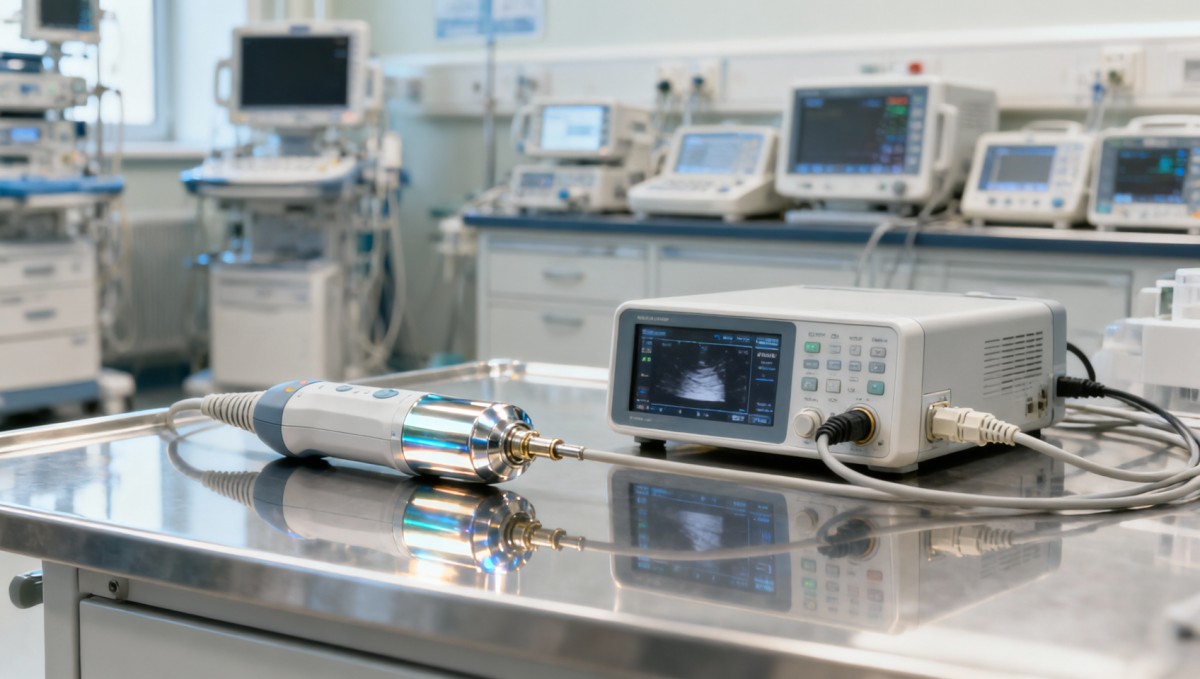
The shortest answer is this: replace an ultrasound probe when its condition creates unacceptable clinical, technical, infection-control, or compliance risk—and when corrective action is no longer reliable or economical.
For most hospitals, clinics, and technical users, replacement becomes the right choice in one or more of the following situations:
- Persistent image degradation affects diagnostic confidence, such as dropout, streaking, dead elements, uneven brightness, poor penetration, or repeat artifacts that remain after system checks.
- The acoustic lens, membrane, or housing is damaged in a way that cannot be safely repaired or validated for continued use.
- Electrical safety or leakage testing fails, especially where patient-contact safety is involved.
- Cracks, seal failures, or fluid ingress create infection-control risk or compromise probe disinfection integrity.
- The probe has entered repeated repair cycles, causing downtime, rising service cost, and operational uncertainty.
- The manufacturer no longer supports the model, making parts, validation, or quality documentation difficult to obtain.
- Regulatory or internal quality policies require retirement once serviceability can no longer be documented.
In other words, replacement is less about age alone and more about whether the probe is still trustworthy in real clinical use.
What do users and operators usually notice first?
Operators often identify problems before engineering teams do, because they see changes in everyday image behavior. The earliest warning signs are usually practical rather than technical on paper.
Common user-reported signs include:
- Image quality that seems “off” compared with previous scans
- Intermittent image loss when the cable moves
- Areas of the image that appear consistently dark or weak
- Reduced sensitivity or poorer visualization at normal settings
- Visible cuts, bubbling, swelling, or peeling on the lens or sheath
- Connector looseness or system recognition problems
These symptoms do not always mean immediate replacement. Sometimes the issue is related to settings, connector contamination, scanner compatibility, or a repairable cable fault. But when a problem is repeatable across users, exams, and systems, it should be escalated quickly for technical inspection.
For decision-makers, this is an important point: user complaints are not merely anecdotal. They are often the first indicator that a probe is moving from “usable” to “clinically risky.”
Which types of damage justify replacement rather than repair?
Not every damaged ultrasound probe needs to be discarded. Some faults can be addressed through qualified service. However, certain forms of damage point strongly toward replacement.
1. Element failure and irreversible image artifacts
If multiple transducer elements are dead or weak, image uniformity and sensitivity can drop enough to affect interpretation. When testing confirms significant element loss and repair is not technically viable, replacement is usually the correct path.
2. Recurrent cable and strain relief failure
A cable issue may be repairable once. But repeated cable breakdown suggests cumulative wear that can continue to produce intermittent failures and workflow disruption. If repairs no longer restore dependable performance, replacement is more cost-effective.
3. Acoustic lens or membrane damage affecting hygiene or imaging
Surface cuts, delamination, swelling, or puncture are serious concerns. These can distort transmission, trap contaminants, and interfere with cleaning and high-level disinfection. If the surface can no longer be validated as safe and functional, replacement should not be postponed.
4. Fluid ingress or compromised seals
Once moisture enters the probe assembly, performance instability and electrical risk increase. Sealing integrity is critical in probes exposed to aggressive cleaning and disinfection routines.
5. Obsolescence with no support pathway
Even if a probe still works, unsupported status may make continued use difficult from a quality assurance perspective. If no approved parts, validated repair route, or service documentation are available, replacement may be the only defensible option.
How do image quality, patient safety, and compliance connect?
This is where replacement decisions become more serious than simple equipment maintenance. An ultrasound probe is not just an accessory. It is a patient-contact device that directly affects image acquisition, clinical workflow, and in some applications infection prevention.
Image quality risk: If a probe introduces artifacts or reduced sensitivity, the problem is not only technical—it can undermine clinical confidence, delay diagnosis, or require repeat examinations.
Patient safety risk: Damaged insulation, seal failure, or electrical leakage can turn a performance issue into a direct safety concern. For endocavity and other high-contact probes, surface integrity is especially critical.
Compliance risk: Healthcare organizations are increasingly expected to document maintenance, testing, cleaning compatibility, and equipment status under structured quality systems. Continued use of a visibly damaged or repeatedly failing probe may be difficult to justify during internal review, accreditation, or external audit.
For institutions working within ISO-aligned quality environments or under FDA and CE MDR expectations, the question is not only “Can this probe still scan?” but also “Can we defend its continued use with evidence?” When the answer becomes uncertain, replacement is often the safer and more responsible decision.
What is the most practical decision framework for replacement?
A useful replacement framework should be simple enough for daily operations and rigorous enough for procurement, biomed, and quality teams. A five-step approach works well:
- Verify the symptom
Confirm whether the issue is probe-related, system-related, or workflow-related. Test across presets, users, and where possible a second compatible system. - Inspect physical condition
Check lens surface, housing, strain relief, cable jacket, connector pins, and signs of fluid ingress, swelling, cracks, or discoloration. - Perform technical and safety testing
Use probe testing tools, electrical safety checks, and image quality assessment to quantify the problem. - Evaluate repairability and support status
Determine whether the probe can be repaired by a qualified provider and whether parts, validation, and documentation remain available. - Compare total cost and risk
Assess repair cost, expected service life after repair, downtime impact, clinical criticality, and the consequence of another failure.
If the probe fails safety criteria, cannot maintain image reliability, or would likely return to service only briefly before another fault, replacement should move ahead without delay.
When is repair or refurbishment still the better option?
Replacement is not always the most efficient choice. For many facilities, especially those balancing capital constraints with high equipment utilization, repair or refurbishment can be entirely appropriate when managed through qualified processes.
Repair may make sense when:
- The fault is isolated and well defined
- Image quality can be fully restored and verified
- Electrical safety and seal integrity can be retested successfully
- The probe model remains clinically relevant and supported
- The expected post-repair service life justifies the expense
Refurbishment can also be useful for extending fleet life, standardizing backup inventory, and controlling procurement budgets. But it should not be treated as a cosmetic shortcut. For medical technology environments, refurbishment must be tied to validated inspection, traceable parts or equivalent quality controls, functional testing, and documentation suitable for institutional quality systems.
The key principle is simple: if a repaired or refurbished probe can return to service with demonstrable reliability and compliance confidence, replacement may be deferred. If not, replacement is the stronger decision.
How can procurement and operations avoid premature or delayed replacement?
The biggest cost mistakes happen at both extremes: replacing probes too early based on appearance alone, or keeping them too long because they still “sort of work.” Both approaches create waste.
To avoid premature replacement:
- Track actual fault history rather than making one-off decisions
- Separate cosmetic wear from functional degradation
- Use standardized acceptance criteria for image and safety testing
- Maintain access to qualified repair assessment before retirement
To avoid delayed replacement:
- Escalate repeat user complaints quickly
- Retire probes with unresolved artifacts affecting diagnosis
- Do not overlook minor membrane damage in high-disinfection environments
- Set thresholds for maximum repair frequency or annual service cost
For organizations managing multiple systems, a lifecycle strategy is more effective than case-by-case reaction. That means linking operator feedback, service records, failure modes, support status, and procurement planning into one replacement policy.
What should buyers and technical teams ask before approving replacement?
Before purchasing a replacement ultrasound probe, teams should ask questions that go beyond price:
- Is the current probe unsafe, noncompliant, or simply inconvenient?
- Has the failure been objectively verified?
- Would qualified repair restore performance with acceptable service life?
- Is the replacement probe original, equivalent, or refurbished—and what evidence supports that classification?
- What testing and documentation will accompany the replacement unit?
- How will the decision affect uptime, training, and system compatibility?
These questions matter because ultrasound probe replacement is not just a purchasing event. It is a technical quality decision with consequences for workflow continuity and diagnostic reliability.
Conclusion: replacement should be evidence-based, not automatic
Ultrasound probes should be replaced when they can no longer deliver clinically reliable performance, maintain safety and hygiene integrity, or meet the documentation expectations of a controlled healthcare environment. Age alone does not decide replacement, and minor wear does not always justify immediate disposal. But persistent image artifacts, failed safety checks, seal damage, unsupported status, and repeated repair cycles are strong signals that replacement is truly needed.
For information researchers, users, and operators, the most practical mindset is this: do not ask only whether a probe still functions—ask whether it still functions with confidence, traceability, and acceptable risk. That standard leads to better decisions, stronger resource allocation, and more dependable imaging support for precision medicine and accessible healthcare delivery.
Recommended News
Metadata & Tools
Related Research
- Where to Find Reliable Product Information Resources for Chemicals and How to Verify ThemProduct information resources for chemicals: learn where to find reliable data, how to verify SDS, TDS, COA, and regulatory records, and avoid costly compliance and sourcing mistakes.
- Industrial PC OEM Wholesale: How to Evaluate Suppliers, MOQs, and Customization?Industrial PC OEM wholesale guide: learn how to evaluate suppliers, compare MOQ terms, and define real customization to reduce risk, control costs, and choose a reliable partner.
- How to Build a Secure Industrial IoT System: Key Risks, Architecture, and ControlsSecure industrial IoT starts with the right architecture. Explore key risks, layered controls, and practical steps to build resilient, compliant, and trustworthy connected systems.
- How to Choose Precision Tools for Medical Assembly and Inspection TasksPrecision tools for medical assembly and inspection must deliver traceability, repeatability, and compliance. Learn how to choose the right options for accurate, audit-ready production.
- CT Radiation Dose Optimization: Key Strategies to Improve Image Quality SafelyCT radiation dose optimization explained: discover practical strategies to reduce unnecessary exposure, protect image quality, and support safer, smarter CT decisions.