
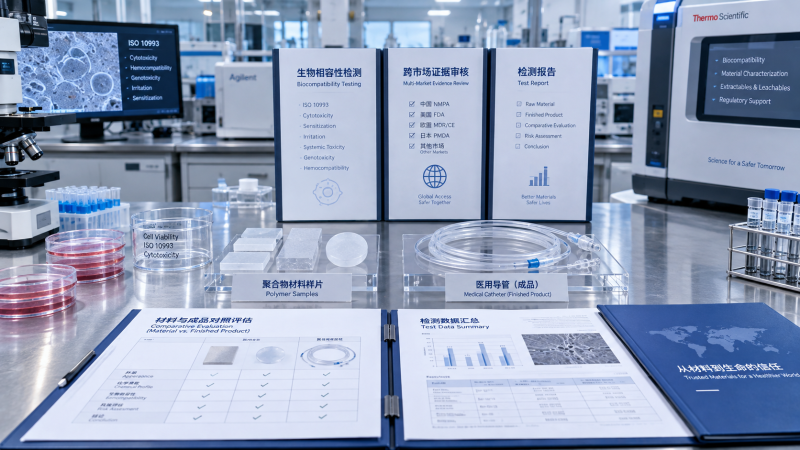
Can biocompatible material certifications from one country be used in another? Often, their supporting evidence can be reused, but the certificate itself rarely guarantees regulatory acceptance.
The answer depends on the evidence behind the certification and the destination market’s regulatory requirements. Where the document was issued is only one consideration.
For procurement directors, laboratory leaders, and med-tech engineers, confusing internationally recognized test standards with regulatory acceptance can delay market entry or weaken purchasing decisions significantly.
This article explains how ISO 10993 testing, laboratory accreditation, and jurisdiction-specific requirements affect evidence reuse, helping you decide when additional documentation or testing is necessary.
What exactly can transfer across borders?
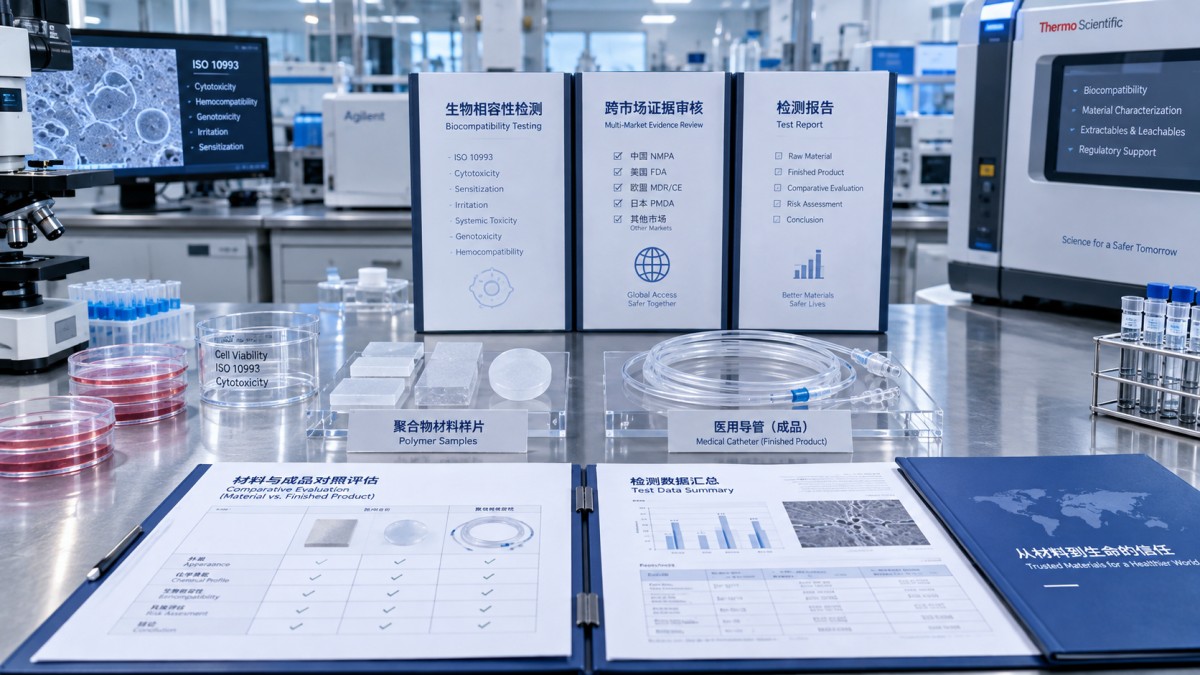
The most useful distinction is between a supplier’s claim, a laboratory’s test report, and authorization to market a medical device. Each serves a different purpose.
A document labeled “biocompatibility certificate” may summarize one cytotoxicity test, several biological endpoints, or a supplier declaration. Its title does not establish its regulatory scope.
Biocompatibility is evaluated for a particular device and intended use, including the nature and duration of patient contact. It is not an unrestricted material property.
A polymer suitable for short contact with intact skin may require substantially different evidence when used in a blood-contacting component or a long-term implantable device.
Consequently, foreign test results can support a submission when they address the relevant device, endpoints, and conditions. Regulators still assess whether the evidence is sufficient.
For purchasing decisions, request the underlying evidence rather than relying on certificate wording. A concise certificate can be useful, but only with traceable supporting documentation.
When is existing ISO 10993 evidence actually reusable?
The ISO 10993 series provides an internationally used framework for biological evaluation. It helps organize evidence, but applying it requires judgment about the specific device.
Start with the intended patient contact: which tissues are exposed, whether contact is direct or indirect, and how long exposure lasts during the intended use.
Next, compare the tested article with the proposed product. Material identity alone is insufficient if manufacturing, cleaning, packaging, or sterilization changes the patient-contacting surface chemistry.
For example, a resin supplier’s report may not address molding additives, adhesive residues, machining fluids, or degradation products introduced while manufacturing the finished medical device.
Testing generally needs to represent the final finished device, including relevant processing and sterilization. Representative samples can sometimes be justified through a documented scientific rationale.
Review the methods as carefully as the results. Extraction conditions, sample preparation, controls, acceptance criteria, and deviations determine whether a report answers the relevant questions.
An isolated cytotoxicity result does not establish complete biological safety. Additional endpoints may matter, depending on contact classification, chemical characterization, existing information, and identified risks.
Conversely, every new submission does not automatically require every possible biological test. A justified evaluation can use existing data, chemical information, and appropriate toxicological assessment.
The practical question is whether the available evidence closes the destination market’s biological safety concerns. A recognized standard provides structure; it does not answer automatically.
How do the United States and European Union assess foreign evidence?
Both markets can use evidence generated outside their territory. Neither offers a universal rule that any foreign “biocompatibility certificate” establishes compliance for any medical device.
United States: connect the evidence to FDA expectations
FDA evaluates biological safety within the applicable device review framework. Requirements depend on the device, its contact characteristics, submission pathway, and the evidence already available.
Its guidance on using ISO 10993-1 describes a risk-based approach to biological evaluation. Consult the current guidance and relevant device-specific recommendations before planning additional studies.
FDA recognition of a consensus standard can support its use in a submission. Check the recognized edition, extent of recognition, and any applicable transition dates.
A statement that testing followed “ISO 10993” is too broad to assess. Identify the particular parts, editions, methods, deviations, and endpoints covered by each report.
Depending on the study, applicable good laboratory practice requirements and submission expectations may also matter. ISO/IEC 17025 accreditation alone does not resolve those separate questions.
For an exempt device, exemption from premarket submission does not eliminate applicable safety obligations. Manufacturers still need an appropriate basis for their biological safety conclusions.
European Union: demonstrate compliance for the finished device
Under the EU Medical Device Regulation, manufacturers must demonstrate compliance with applicable general safety and performance requirements. Biological evidence contributes to that device-specific technical documentation.
The biological evaluation should connect material characteristics, manufacturing information, patient exposure, and risk management. Where required, a notified body reviews evidence within conformity assessment activities.
Using an applicable harmonized standard may provide a presumption of conformity for requirements it covers. Confirm its publication status, relevant edition, and any associated restrictions.
An ISO standard’s international publication does not itself establish EU harmonized status. Likewise, a supplier’s material certificate cannot substitute for the manufacturer’s finished-device conformity assessment.
CE marking belongs to products covered by relevant EU legislation. A claim that a raw material is “CE biocompatible” requires careful clarification of its meaning.
What changes when entering other countries?
Canada, Australia, Japan, China, and other markets may consider internationally generated evidence, but their submission formats, recognized standards, and regulatory pathways differ in important ways.
Some pathways allow reliance on overseas regulatory decisions or conformity assessments under specified conditions. Such reliance does not necessarily resolve every device-specific biological safety question.
Check whether the destination requires translations, particular report contents, local representation, or additional testing. Requirements can vary with device classification and the chosen application route.
Existing approvals can help establish regulatory history, but they do not prove that the destination authority accepts the same evidence package without further supporting justification.
Before commissioning new studies, create a market-specific gap assessment. This prevents unnecessary duplication while identifying documentation or technical gaps that could interrupt the application process.
Does laboratory accreditation make a foreign report acceptable?
ISO/IEC 17025 accreditation supports confidence in laboratory competence for activities within its accredited scope. Verify that the scope actually covers the methods used in testing.
A laboratory may be accredited for chemical analysis while a particular biological assay falls outside its scope. The accreditation logo alone cannot reveal that distinction.
Also verify the accreditation body, current accreditation status, and the report’s identification of accredited activities. These checks strengthen confidence in the provenance of the evidence.
The ILAC Mutual Recognition Arrangement supports recognition of accredited laboratory results among participating accreditation systems. It does not compel medical-device regulators to accept every report.
Regulatory acceptance still depends on study relevance, methods, sample identity, and applicable requirements. An accredited laboratory can produce a technically valid report with insufficient scope.
For example, a well-executed test on an unsterilized coupon may leave unanswered questions about a sterilized device. Laboratory competence and sample relevance are separate considerations.
What should procurement teams request before accepting a claim?
Hospital buyers usually need assurance about the finished device’s lawful supply and suitability for its intended use. Raw-material reports provide only part of that assurance.
Ask the supplier to identify the exact product, model, manufacturer, intended use, and destination-market regulatory status. Confirm that the supplied documentation matches the purchased configuration.
Then request evidence explaining the biological safety conclusion for patient-contacting components. Access arrangements may vary, but a supplier should provide a meaningful, traceable technical explanation.
Detailed proprietary reports may require confidentiality arrangements or controlled review. Procurement teams can still require report identifiers, scope summaries, and clear explanations of remaining limitations.
Use the following checklist to distinguish a useful evidence package from a certificate that offers little support for purchasing, engineering, or regulatory decisions in practice.
- Product match: Does the documentation cover the actual device, material formulation, manufacturing route, and sterilization process?
- Exposure match: Does it address the relevant contact tissue, contact duration, and intended patient population?
- Evidence completeness: Are full reports available, with methods, sample descriptions, results, deviations, and traceable identifiers?
- Scientific justification: Is there an evaluation explaining endpoint selection, evidence reuse, and any testing omissions?
- Market relevance: Does the package address current requirements in the country where the device will be supplied?
- Change control: Will the supplier notify you about formulation, processing, site, or sterilization changes affecting the evidence?
For laboratory equipment, first establish whether the product is a medical device and whether patient contact occurs. Research equipment can require a different compliance assessment.
How can manufacturers avoid unnecessary repeat testing?
Build the reuse assessment around evidence gaps, rather than the certificate’s country of origin. Begin by collecting existing reports and identifying the tested article precisely.
Compare the previous and proposed devices across formulation, suppliers, processing, contact characteristics, sterilization, and packaging. Document which differences could affect biological safety and explain why.
Next, map existing evidence against destination requirements and the biological evaluation plan. Classify gaps as missing documentation, insufficient scientific justification, or genuinely missing safety evidence.
A missing laboratory appendix may require document retrieval. A formulation change may require additional characterization. Neither issue should automatically trigger repetition of every available test.
Where chemical characterization and toxicological assessment can address a question appropriately, evaluate that option. Their adequacy depends on exposure, analytical coverage, and the relevant risks.
Keep the reasoning in a controlled evaluation document. Reviewers need to understand why previous data remain relevant and how unresolved questions were addressed before submission.
This approach can reduce duplicated work and support more predictable planning. Savings depend on evidence quality and device similarity, so avoid promising universal acceptance beforehand.
A practical example: the same polymer, different conclusions
Consider a manufacturer introducing a catheter into another market using polymer reports generated abroad. The first question is what those reports actually tested and established.
If they cover only the base resin, they may omit extrusion residues, bonding agents, sterilization effects, and the blood-contacting conditions relevant to the finished catheter.
If they cover an equivalent finished catheter, supported by comparable processing and exposure information, reuse becomes more defensible. Any differences still need a documented assessment.
The required next step could be obtaining missing records, updating the biological evaluation, or conducting targeted additional work. The report’s nationality alone determines none of these.
Make the decision on evidence, device relevance, and market requirements
Biocompatibility evidence can cross borders when it is reliable, relevant, and sufficient for the destination’s requirements. Certificates themselves do not provide universal permission to sell.
For procurement teams, prioritize finished-device status and traceable safety documentation. For manufacturers, invest in complete reports, documented relevance assessments, and disciplined control of product changes.
Before relying on existing evidence, consult authoritative resources such as FDA medical-device guidance, the EU Medical Device Regulation, and the destination authority’s current requirements.
A defensible decision establishes what was tested, why it represents the supplied device, and whether it answers local requirements. That is the basis for reuse.