
Lead Author
Institution
Published
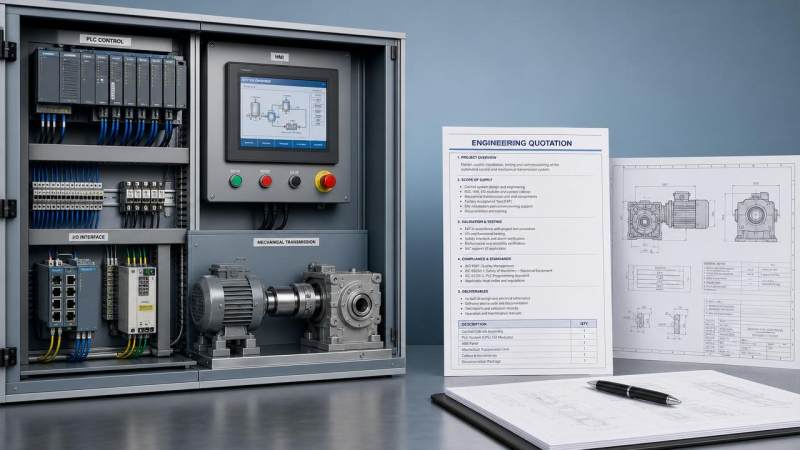
Abstract
A clear automation engineering quotation is more than a pricing document—it is the foundation for predictable delivery, regulatory alignment, and cost control.
In medical technology, laboratory systems, and broader industrial automation, vague assumptions often become expensive change orders, delays, and validation failures.
A well-structured automation engineering quotation helps define scope, confirm technical boundaries, and expose hidden risks before execution begins.
This matters even more in regulated environments, where documentation quality directly affects commissioning, traceability, and compliance readiness.
For organizations working across imaging, IVD, hospital infrastructure, rehabilitation devices, and life science tools, quotation clarity supports stronger supplier comparison and fewer costly surprises.
Understanding the role of an automation engineering quotation
An automation engineering quotation summarizes the technical, commercial, and delivery assumptions behind an automation project.
It should not be treated as a simple price sheet.
Instead, it acts as a control document linking design intent, equipment selection, software scope, interfaces, validation needs, and project responsibilities.
In high-precision sectors, the automation engineering quotation also supports evidence-based evaluation against standards such as ISO 13485, FDA expectations, and CE MDR documentation needs.
When written clearly, the quotation reduces ambiguity between the customer team, system integrator, controls engineer, and equipment supplier.
That shared understanding is what prevents rework later.
Core elements that should always appear
- Project scope and explicit exclusions
- Functional description of machines, lines, or subsystems
- Controls architecture, PLC, HMI, SCADA, and network details
- Electrical, mechanical, software, and safety deliverables
- Documentation package and revision expectations
- Validation, FAT, SAT, IQ, OQ, or commissioning assumptions
- Timeline, milestones, dependencies, and commercial terms
Industry context shaping quotation quality
Automation projects are becoming more data-driven, connected, and regulated.
As systems integrate robotics, vision, traceability, and remote monitoring, the quotation must reflect this complexity with precision.
Across medical and life sciences, poor quotation detail can affect not only cost, but product quality, patient safety, and audit readiness.
This is why a robust automation engineering quotation should be reviewed as a technical baseline, not merely a commercial offer.
Business value of a clear automation engineering quotation
The strongest benefit is risk reduction.
A clear automation engineering quotation reveals what is included, what requires client input, and where uncertainty remains.
That visibility improves budgeting accuracy and contract discipline.
It also strengthens bid comparison.
Two suppliers may quote similar totals, yet one may exclude validation protocols, software testing, spare parts, or on-site training.
Without line-by-line clarity, the lower initial price can become the higher final cost.
Operational gains created by quotation clarity
- Fewer engineering assumptions left unresolved
- Better control of project scope and change management
- Improved planning for FAT, SAT, and site readiness
- Stronger alignment between automation, quality, and validation records
- Lower probability of installation delays and software rework
In sectors covered by G-MLS, this level of transparency supports data-driven engineering integrity and informed technical decision-making.
Typical quotation scenarios across automation environments
The structure of an automation engineering quotation varies by system type, but the need for precision remains constant.
Each case changes the quotation detail, but not the discipline required.
The best automation engineering quotation always links technical design to measurable deliverables.
What often causes costly rework
Rework usually begins long before installation.
It starts when scope statements are broad, assumptions are hidden, or compliance tasks are not assigned.
Common quotation weaknesses
- Unclear boundaries between electrical, software, and mechanical scope
- No list of excluded hardware or third-party licenses
- Undefined customer responsibilities for utilities, data, or approvals
- Missing details on testing protocols and acceptance criteria
- Weak revision control for URS, FDS, SDS, and drawings
- No allowance for site constraints or cleanroom requirements
These gaps may appear minor during bidding.
Later, they can trigger redesign, retesting, procurement delays, or compliance remediation.
A disciplined automation engineering quotation makes those issues visible before commitment.
Practical review points before approval
A quotation review should combine technical, quality, and commercial checks.
The goal is not simply to challenge price.
The goal is to confirm that the automation engineering quotation can support reliable execution.
- Match the quotation against the latest URS and process map.
- Confirm all interfaces, data points, and protocol standards.
- Check whether validation deliverables are named and costed.
- Review assumptions about utilities, installation windows, and site access.
- Compare component brands, obsolescence risk, and approved alternatives.
- Verify training, manuals, source code access, and after-sales support terms.
- Ensure exclusions are listed in direct, unambiguous language.
These checks create a more dependable automation engineering quotation and a stronger project baseline.
A structured next step for better project outcomes
Organizations evaluating automation projects should standardize how quotations are requested and reviewed.
A uniform template improves supplier comparison and highlights missing technical detail faster.
This is especially useful in regulated medical and life science environments, where documentation integrity has direct operational value.
A strong automation engineering quotation should align scope, compliance, testing, and lifecycle support from the beginning.
That early clarity reduces rework, protects timelines, and supports better investment decisions across complex automation programs.
Using trusted technical reference frameworks, benchmark data, and standards-based review methods can turn quotation analysis into a practical risk-control tool.
Recommended News
Metadata & Tools
Related Research
- Immunoassay Cross-Reactivity Metrics: Calculating Percentages and Assessing BiasMaster immunoassay cross-reactivity metrics: learn to calculate percentages, assess assay bias, and evaluate clinical impact with practical examples for better-informed decisions.
- Choosing a Lab Tools Supplier: Quality Checks, Lead Times, and Warranty TermsChoose a lab tools supplier with confidence. Discover how to verify quality, confirm lead times, and compare warranty terms to avoid costly delays and protect your lab’s budget.
- Choosing Interactive Pet Toys: Matching Size, Play Style, and Safety NeedsExplore nteractivepettoys matched to your pet’s size, play style, and safety needs. Compare puzzles, treat dispensers, and moving toys to choose smarter and make playtime more rewarding.
- NGS Sequencing Cost Benchmark Report: Comparing Total Costs per SampleNGS sequencing cost benchmark report: compare total costs per accepted sample, uncover hidden expenses, and evaluate suppliers with confidence to make smarter procurement decisions.
- Diagnostic Imaging Market Outlook: Growth Opportunities in CT, MRI, and UltrasoundExplore the diagnostic imaging market outlook for CT, MRI, and ultrasound. Discover growth opportunities, technology trends, and procurement insights to guide smarter healthcare investments.