
Lead Author
Institution
Published
Abstract
As laboratories expand automation, data integrity, and compliance requirements, selecting a reliable lab labeling system factory is no longer a narrow equipment decision. It directly affects specimen traceability, labeling accuracy, audit readiness, integration with sample preparation workflows, and long-term procurement risk. For most buyers, the key question is not simply whether a system can print labels, but whether the factory behind it can consistently support traceable, compliant, scalable lab operations across real-world use cases.
For procurement teams, laboratory managers, QA professionals, and technical evaluators, the most important issues are practical: print durability, barcode readability, software interoperability, validation support, consumable stability, after-sales responsiveness, and alignment with regulated workflows. In other words, the value of a lab labeling system lies in operational reliability and traceability performance, not in brochure-level feature lists.
This article focuses on the real decision criteria behind lab labeling system factory selection, with special attention to traceability needs, compliance risk, workflow fit, and total lifecycle value for modern laboratories.
Why a lab labeling system factory matters more than the printer itself
Many organizations begin by comparing print resolution, label speed, or hardware footprint. Those specifications matter, but they do not fully answer the larger operational question: can the factory provide a dependable labeling ecosystem that supports traceability from sample receipt to storage, testing, reporting, and archiving?
A capable lab labeling system factory usually provides more than a standalone device. It supports the full chain of labeling performance, including:
- Label material compatibility with cryogenic, refrigerated, ambient, and heated environments
- Barcode and 2D code print quality across different sample containers
- Software integration with LIMS, MES, ERP, and instrument platforms
- Validation documentation for regulated environments
- Supply consistency for labels, ribbons, and consumables
- Change control, firmware support, and service continuity
In laboratories where mislabeling can trigger retesting, specimen loss, compliance findings, or patient safety concerns, factory-level capability becomes a strategic issue. Buyers should evaluate whether the manufacturer can support repeatable performance at scale, not just initial installation.
What traceability needs actually require in modern laboratory operations
Traceability is often discussed broadly, but laboratory buyers should translate it into specific operational requirements. A traceable labeling environment should allow every sample, reagent, batch, or workflow event to be accurately identified, linked, and retrieved throughout its lifecycle.
In practical terms, this usually means the labeling system must support:
- Unique sample identification with durable and scannable codes
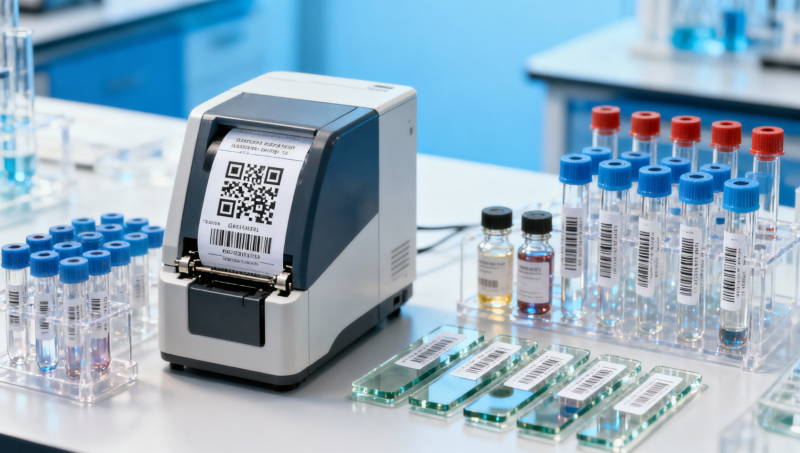
- Readable labeling on tubes, slides, vials, plates, bags, and specialty containers
- Chain-of-custody tracking for high-value or regulated samples
- Human-readable and machine-readable information on the same label
- Stable print performance under condensation, freezing, centrifugation, or chemical exposure
- Reliable linkage between label data and digital laboratory records
For labs handling IVD workflows, biobanking, clinical research samples, pathology materials, or GMP-adjacent operations, traceability needs may also include audit trail support, operator accountability, version control, and standardized data structures. If the factory cannot demonstrate experience in these application scenarios, the risk of workflow mismatch is higher.
How to evaluate a lab labeling system factory beyond marketing claims
Technical and procurement teams should assess a supplier using evidence-based criteria. This reduces the chance of selecting a system that performs well in demos but creates friction during routine operation.
Key evaluation areas include:
1. Application fit
Ask whether the factory has proven solutions for your exact environment. A system optimized for office-style labeling may fail in a molecular lab, blood processing unit, or frozen sample storage workflow. Buyers should request evidence of performance on the container types, temperatures, chemicals, and throughput conditions they actually use.
2. Print and scan reliability
Traceability depends on readability. Assess barcode verification rates, small-format label clarity, resistance to smearing, adhesion on curved surfaces, and scan consistency after storage or transport. If possible, ask for sample validation under your operating conditions rather than generic test sheets.
3. Software and data integration
A strong lab labeling system factory should support integration with LIMS and related digital infrastructure. Important questions include:
- Does the system support standardized communication methods or APIs?
- Can templates be centrally controlled?
- Is user access managed securely?
- Can print events be logged for audit review?
- How are software updates documented and controlled?
4. Regulatory and quality alignment
For buyers in regulated settings, factory quality systems matter. Depending on use case, look for manufacturing and documentation practices aligned with ISO 13485, quality traceability procedures, controlled documentation, and clear validation support. Even if the labeling system itself is not classified as a medical device, poor quality discipline can still create compliance exposure.
5. Service and lifecycle support
Labeling systems often become mission-critical infrastructure. Procurement teams should evaluate spare part availability, consumable lead times, field support capability, training resources, and change notification practices. A lower upfront price can become costly if support is weak or consumables are inconsistent.
Questions procurement and QA teams should ask before purchase
To move from general comparison to defensible supplier selection, teams should ask direct operational questions. The answers often reveal more than product catalogs do.
- What laboratory environments has the factory already supported successfully?
- Can it provide sample labels tested under cryogenic, refrigerated, or solvent-exposed conditions?
- How does it control batch consistency for labels and ribbons?
- What is the barcode failure or reprint rate in comparable deployments?
- What documentation is available for qualification, validation, and change control?
- How does the system integrate with sample preparation system OEM workflows or external automation platforms?
- What training is required for operators, administrators, and maintenance staff?
- How quickly can technical support respond to print interruptions or software issues?
- What are the long-term consumable and maintenance costs?
These questions help both technical evaluators and business decision-makers balance performance with risk, supportability, and cost predictability.
Integration with automated workflows and adjacent lab equipment
Today’s buyers increasingly evaluate labeling systems as part of broader laboratory automation architecture. This is especially relevant where the labeling system must work alongside aliquoting platforms, sample preparation system OEM modules, automated analyzers, storage systems, and digital tracking software.
In these environments, the factory should be able to demonstrate:
- Consistent output for high-throughput workflows
- Support for variable data printing in automated sequences
- Mechanical compatibility with container handling systems
- Stable communication with upstream and downstream software
- Error handling processes that prevent unlabeled or mislabeled specimens
This broader view is important because traceability failures often occur at handoff points, not at isolated devices. A labeling system that works well manually but poorly within automation can undermine the productivity gains a lab expects from digital transformation.
Similarly, buyers benchmarking adjacent equipment categories, such as a digital pipette manufacturer or automated dispensing platform, should apply similar evaluation logic: precision, data integrity, workflow compatibility, maintenance demands, and supplier support maturity. In a well-run lab, these systems do not operate independently; they form a traceable operational chain.
Total cost of ownership: the hidden factor behind labeling system decisions
Many purchasing decisions focus too heavily on hardware price. In practice, the real cost of a lab labeling system includes much more:
- Label and ribbon consumption over time
- Software licensing or integration costs
- Validation and implementation labor
- Downtime from print failures or unreadable labels
- Retraining after system changes
- Rework, investigation, or sample loss caused by traceability errors
A higher-quality lab labeling system factory may offer better lifecycle value if it reduces relabeling, audit exposure, consumable waste, and support delays. For enterprise buyers and project managers, this is often the more important financial perspective than unit price alone.
Best-fit scenarios: what different stakeholders should prioritize
Different decision-makers often evaluate the same system through different lenses. A stronger purchasing process aligns these priorities early.
For laboratory users and operators
Ease of use, fast template selection, low error rates, readable labels, and minimal maintenance burden are crucial. If the interface is complex or the media loading process is unreliable, adoption problems will appear quickly.
For quality and safety personnel
Focus on traceability controls, documentation quality, label permanence, audit readiness, and exception handling. A system must make it easier to maintain compliant records, not harder.
For technical evaluators and engineers
Integration architecture, print engine reliability, consumable compatibility, and environmental performance should be central. Technical teams should also verify serviceability and upgrade management.
For procurement and business evaluators
Supplier stability, delivery reliability, total cost of ownership, contract clarity, and long-term support capability matter most. Procurement should also assess whether the factory can scale with multi-site demand.
For decision-makers and project leaders
The core issue is risk-adjusted value. A suitable factory should help standardize labeling quality across departments, improve operational visibility, reduce traceability failures, and support future automation plans.
Common warning signs when assessing a supplier
Some supplier limitations become visible only after implementation. Buyers can reduce risk by watching for common red flags during evaluation:
- Vague claims about compliance without supporting documentation
- No clear evidence of laboratory-specific deployments
- Limited support for LIMS or automation integration
- Consumables sourced inconsistently from changing vendors
- Poor change notification practices for software or materials
- Weak after-sales response commitments
- Overreliance on generic distributor messaging rather than factory expertise
For high-accountability environments, these warning signs should be taken seriously. A traceability system is only as dependable as the supplier processes behind it.
Conclusion
Choosing a lab labeling system factory is fundamentally a traceability, quality, and operational continuity decision. The right supplier should deliver not only printing capability, but also durable labeling performance, integration readiness, quality documentation, stable consumables, and lifecycle support that fits real laboratory demands.
For laboratories navigating compliance pressure, automation expansion, and procurement scrutiny, the best approach is to evaluate factories through evidence: application-specific testing, system interoperability, support maturity, and total cost over time. When these factors are assessed carefully, buyers can select a labeling solution that improves workflow confidence rather than adding hidden operational risk.
In short, a strong lab labeling system factory does not just produce labels. It enables reliable traceability across the laboratory value chain.
Recommended News
Metadata & Tools
Related Research
- How to Interpret Clinical Equipment Specifications for Safe Hospital ProcurementClinical equipment specifications explained for safer hospital procurement—compare performance, compliance, interoperability, lifecycle costs, and workflow fit.
- Outdoor Furniture Buying Guide: Materials, Weather Resistance, and Space PlanningOutdoor furniture buying guide: compare durable materials, weather resistance, cushion care, and smart space planning to create a comfortable, long-lasting outdoor retreat.
- How to Evaluate a DNA Extraction Kit Manufacturer for Consistent Yield and PurityDNA extraction kit manufacturer evaluation guide: compare yield consistency, purity, quality controls, support, and supply reliability for confident purchasing.
- Long-Read Sequencing: When Does It Outperform Short-Read NGS for Variant Analysis?Long read sequencing outperforms short-read NGS for structural variants, repeat expansions, phasing, and hard-to-map genes. Discover when its added resolution delivers value.
- What Determines Battery Cycle Life in Mobility Scooters—and How to Extend ItWheelchair battery cycle life for mobility scooters: discover charging, storage, and maintenance tips to extend range, avoid failures, and ride with confidence.