
Lead Author
Institution
Published
Abstract
What Limits RFID Read Range Optimization Results?
In medical and life science environments, rfid read range optimization is rarely limited by reader power alone.
Technical evaluators must account for tag orientation, antenna design, surrounding materials, electromagnetic noise, regulatory constraints, and validation requirements tied to clinical-grade reliability.
For hospitals, laboratories, and med-tech facilities, understanding these limiting factors is essential before benchmarking RFID performance for asset tracking, specimen management, device identification, or automated inventory workflows.
Why RFID Read Range Optimization Needs a Checklist
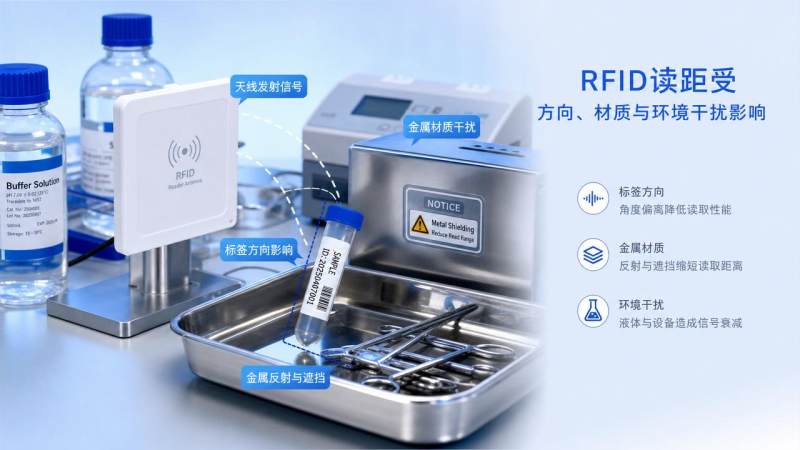
RFID performance changes when the environment changes. A tag that reads well in open air may fail near stainless steel, fluids, shielding, or moving equipment.
That makes rfid read range optimization a controlled engineering task, not a simple power adjustment. Each variable must be isolated, measured, and documented.
A checklist prevents false conclusions. It also helps compare systems against operational needs, regulatory expectations, and repeatability requirements.
Core Checklist for RFID Read Range Optimization
- Confirm the operating frequency before testing, because LF, HF, NFC, and UHF RFID respond differently to liquids, metals, distance, and antenna geometry.
- Map the real read zone instead of recording only maximum distance, since reliable coverage depends on angles, dead spots, motion, and tag presentation.
- Test tag orientation in multiple axes, because polarization mismatch can sharply reduce rfid read range optimization results even with sufficient reader output.
- Match tag type to the surface material, using on-metal tags, lab-grade labels, or encapsulated tags where standard inlays underperform.
- Measure performance near liquids, reagents, tissue samples, or humid packaging, since water absorption can weaken RF coupling and reduce consistency.
- Review antenna gain, beam pattern, and placement, because excessive focus may create strong reads in one area and failures nearby.
- Control reader power within legal limits, then validate whether increased output improves reliability or only raises interference and stray reads.
- Check cable length, connector quality, and impedance matching, as small RF losses can distort rfid read range optimization measurements.
- Separate wanted reads from unintended reads by setting filters, session parameters, dwell time, and software thresholds during validation.
- Document environmental conditions during each test, including temperature, nearby devices, rack layout, workflow speed, and shielding materials.
Technical Factors That Limit Read Range
Tag Sensitivity and Chip Performance
Tag sensitivity defines how little energy a chip needs to respond. Lower sensitivity tags require stronger fields or shorter distances.
For rfid read range optimization, tag selection should start with the intended surface, data capacity, memory security, and sterilization exposure.
Antenna Design and Polarization
Antenna design shapes the usable read field. Linear antennas can reach farther, but circular polarization often handles orientation variation better.
Incorrect polarization creates unstable results. This is common when tags rotate on trays, cartons, instruments, vials, or mobile assets.
Materials, Liquids, and Metals
Metals reflect and detune RF energy. Liquids absorb energy, especially in UHF systems. Both effects can sharply limit range.
Effective rfid read range optimization often requires spacers, tuned on-metal tags, shielded portals, or repositioned antennas.
Reader Configuration
Reader power is only one setting. Inventory mode, session behavior, Q value, filtering, retry logic, and trigger timing also affect results.
A high-power reader can still miss tags if software timing does not match actual workflow movement.
Electromagnetic Noise
Medical imaging rooms, automated analyzers, wireless networks, motors, elevators, and power supplies can influence RF performance.
Noise audits should be included in rfid read range optimization whenever reads become inconsistent without obvious physical changes.
Scenario Notes for Medical and Life Science Use
Asset Tracking in Clinical Facilities
Mobile assets create variable angles, speeds, and surrounding materials. Beds, pumps, carts, and diagnostic accessories often pass through mixed RF conditions.
In these settings, rfid read range optimization should prioritize consistent zone detection over maximum distance. Boundary control matters more than long-range capture.
Specimen and Sample Management
Specimens may involve fluids, cold storage, dense racks, and small labels. These conditions limit tag size and RF exposure.
HF or specialized UHF designs may be preferable, depending on tube geometry, rack material, freezing conditions, and traceability requirements.
Automated Inventory Workflows
Inventory cabinets, storage rooms, and supply stations need controlled read boundaries. Excess range can create false stock counts from nearby shelves.
Here, rfid read range optimization means narrowing the field, using shielding, and tuning software rules to match physical compartments.
Device Identification and Compliance
Device identification requires durable tags, stable memory access, and predictable reads across cleaning, transport, and maintenance events.
Validation should align with ISO 13485 documentation practices, internal risk controls, and applicable regulatory traceability expectations.
Commonly Overlooked Limits and Risks
Ignoring Minimum Reliable Range
Maximum range is attractive, but minimum reliable range is more important. Systems must read correctly under worst-case positions and routine handling.
Treating Every Missed Read as a Power Problem
Power increases can mask root causes. They may also introduce cross-reads, regulatory issues, antenna saturation, or unwanted reads beyond the target zone.
Skipping Real Workflow Testing
Static bench tests rarely represent actual workflows. Motion, human handling, stacked materials, doors, carts, and adjacent systems can change performance.
Using Untuned Labels on Difficult Surfaces
Generic labels can fail on metal, glass, foil, cold containers, or curved surfaces. Tag tuning must match physical placement.
Overlooking Data Integrity
A read event is only useful when identity, timestamp, location, and system logic remain accurate. RF success does not guarantee process success.
Practical Execution Steps
- Define success metrics before tuning, including required read probability, allowable false reads, workflow speed, and acceptable tag placement variation.
- Create a representative test set with real containers, instruments, racks, packaging, liquids, and surfaces instead of simplified samples.
- Run baseline measurements at legal reader power, then change only one variable during each rfid read range optimization cycle.
- Record antenna position, tag type, firmware settings, environmental conditions, and failure patterns so results remain traceable and repeatable.
- Validate the final configuration during live or simulated workflow movement, not only in static laboratory positioning.
Decision Criteria Before Final Approval
Final approval should depend on repeatability, not a single best-case demonstration. RFID systems must perform under normal variation.
Review the following criteria before locking a configuration:
- Verify that read accuracy remains stable across shifts, operators, equipment movement, temperature changes, and nearby wireless activity.
- Confirm that the chosen tags survive cleaning, sterilization exposure, cold storage, abrasion, and expected service life.
- Check that antennas do not capture items outside the intended zone, especially in dense storage or adjacent workflow areas.
- Ensure that software filters and event rules support traceability, audit readiness, and exception handling.
Summary and Next Action
The main limits on rfid read range optimization are physical, electrical, regulatory, and procedural. Reader power is only one variable.
Reliable results require matched tags, suitable antennas, controlled RF zones, realistic workflow testing, and documented validation.
For clinical, laboratory, and med-tech environments, the next step is to build a controlled test matrix before selecting hardware.
Use the checklist to isolate constraints, compare configurations, and confirm that rfid read range optimization supports dependable identification, traceability, and operational control.
Recommended News
Metadata & Tools
Related Research
- Immunoassay Cross-Reactivity Metrics: Calculating Percentages and Assessing BiasMaster immunoassay cross-reactivity metrics: learn to calculate percentages, assess assay bias, and evaluate clinical impact with practical examples for better-informed decisions.
- Choosing a Lab Tools Supplier: Quality Checks, Lead Times, and Warranty TermsChoose a lab tools supplier with confidence. Discover how to verify quality, confirm lead times, and compare warranty terms to avoid costly delays and protect your lab’s budget.
- Choosing Interactive Pet Toys: Matching Size, Play Style, and Safety NeedsExplore nteractivepettoys matched to your pet’s size, play style, and safety needs. Compare puzzles, treat dispensers, and moving toys to choose smarter and make playtime more rewarding.
- NGS Sequencing Cost Benchmark Report: Comparing Total Costs per SampleNGS sequencing cost benchmark report: compare total costs per accepted sample, uncover hidden expenses, and evaluate suppliers with confidence to make smarter procurement decisions.
- Diagnostic Imaging Market Outlook: Growth Opportunities in CT, MRI, and UltrasoundExplore the diagnostic imaging market outlook for CT, MRI, and ultrasound. Discover growth opportunities, technology trends, and procurement insights to guide smarter healthcare investments.