
Lead Author
Institution
Published
Abstract
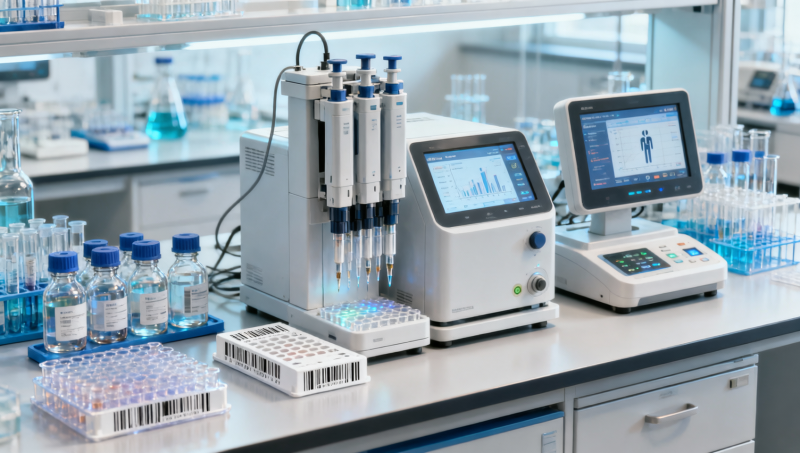
In modern labs, choosing the right life science tools can dramatically cut workflow time while improving accuracy and compliance. From IVD equipment and automated immunoassay analyzers to medical imaging equipment and biocompatible materials, today’s innovations support faster research, smarter medical procurement, and stronger alignment with medical device standards and clinical innovation.
If the question is which life science tools save the most lab time, the short answer is this: the biggest time savings usually come from tools that remove manual, repetitive, error-prone steps. In most laboratories, that means automated liquid handling systems, sample preparation automation, integrated data management platforms, rapid detection instruments, and workflow-connected IVD laboratory equipment. For researchers, lab operators, and technical evaluators, the real issue is not just speed in isolation. It is whether a tool reduces hands-on time, lowers rework, supports compliance, and fits the lab’s actual workflow.
This matters because many laboratories do not lose the most time in headline experiments. They lose it in setup, transfers, documentation, quality checks, repeated calibration, sample tracking, and result reporting. The best life science research tools are therefore the ones that shorten the full process, not just a single assay step.
Which tools usually save the most lab time in real workflows
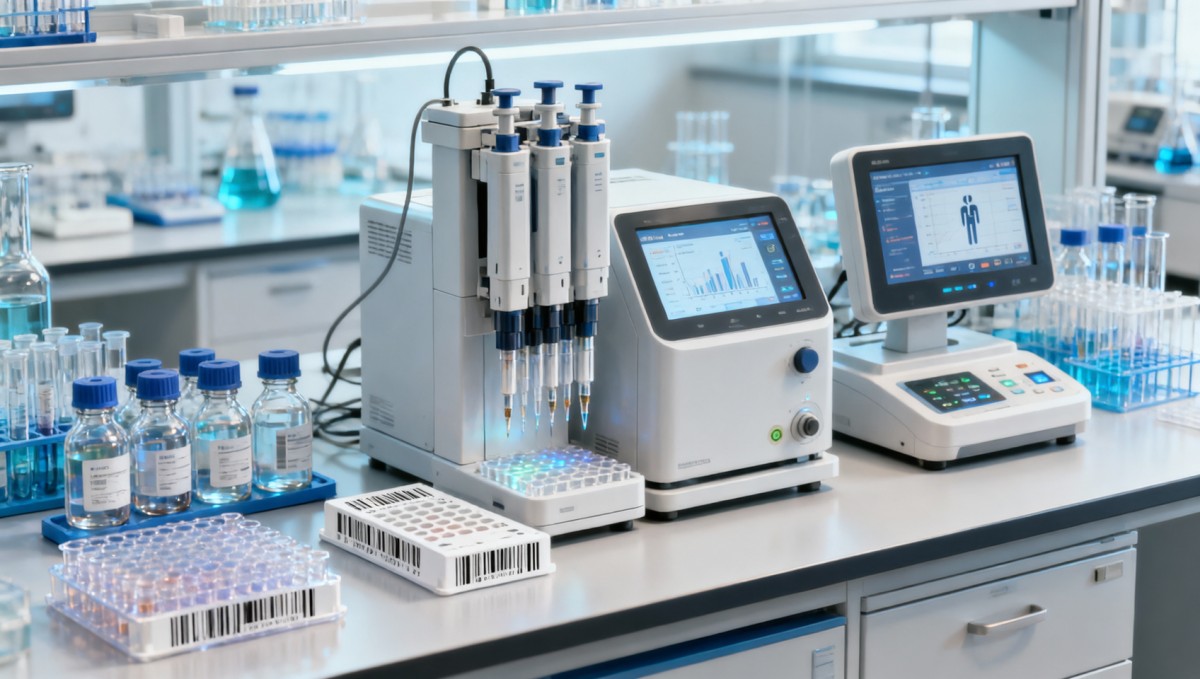
For most labs, the highest-impact categories are consistent across research, diagnostics, and translational environments. These tools tend to deliver the clearest time savings:
- Automated liquid handling systems: reduce pipetting time, improve repeatability, and allow batch processing for PCR setup, assay preparation, and screening workflows.
- Automated sample preparation platforms: save time in extraction, purification, labeling, and normalization, especially where sample volume is high.
- Integrated immunoassay and IVD analyzers: cut turnaround time by consolidating incubation, detection, and reporting into one controlled process.
- Laboratory information management systems (LIMS) and connected data platforms: reduce time spent on transcription, traceability, audit preparation, and result retrieval.
- High-throughput screening and multi-mode detection systems: accelerate reading, analysis, and comparison across many samples.
- Rapid imaging and digital analysis tools: shorten acquisition and interpretation time in microscopy, pathology support, and cell analysis workflows.
If a lab still relies heavily on manual transfers, spreadsheet-based sample tracking, and disconnected instruments, the time-saving potential from automation is usually substantial. In many cases, the greatest efficiency gain comes not from buying the fastest machine, but from eliminating workflow interruptions between machines, operators, and records.
Where labs actually lose time before they realize it
Many purchasing and workflow decisions focus too narrowly on instrument runtime. But users and operators often know that bottlenecks appear elsewhere. Common hidden time losses include:
- Manual sample labeling and relabeling
- Repeated pipetting and plate setup
- Instrument changeover and recalibration
- Waiting for approvals or result verification
- Data re-entry into separate systems
- Error correction after failed or inconsistent runs
- Maintenance routines that interrupt daily throughput
This is why a slower instrument with better automation, fewer failure points, and cleaner data integration can save more time overall than a theoretically faster standalone device. For hospital labs, bioscience research facilities, and technical operations teams, end-to-end workflow efficiency is often more important than single-step instrument speed.
How to judge whether a tool will really save time in your lab
The most useful evaluation question is not “Is this tool advanced?” but “Which current task does it remove, shorten, or simplify?” A practical assessment should include the following:
- Hands-on time reduction: how many operator minutes are removed per batch, run, or day?
- Throughput impact: can the lab process more samples without adding staff or shifts?
- Error reduction: does the tool lower repeat runs, contamination risk, or documentation mistakes?
- Integration: can it connect with existing IVD equipment, analyzers, software, and reporting systems?
- Compliance support: does it help maintain traceability and support standards relevant to regulated environments?
- Training burden: how long does it take for regular operators to use it efficiently and correctly?
For organizations involved in medical technology, clinical innovation, or regulated procurement, time savings should always be assessed alongside data integrity. A tool that is fast but creates gaps in traceability may increase operational risk later. In environments influenced by ISO 13485, FDA expectations, or CE MDR-related documentation practices, reliable records can be just as valuable as higher throughput.
Which tool categories matter most by lab type
Not every lab gains time in the same way. The best investment depends on workload, regulatory exposure, and sample complexity.
For research laboratories:
Automated liquid handling, plate readers, digital imaging systems, colony counters, and analysis software usually create fast gains. These labs benefit most when repetitive setup and data collection are reduced.
For clinical and IVD-focused laboratories:
Automated immunoassay analyzers, sample accessioning systems, barcode tracking, middleware, and result-reporting integration often save the most time. Here, turnaround time, reproducibility, and audit readiness are critical.
For translational and multi-user facilities:
Shared platforms that standardize protocols, automate sample prep, and centralize data management tend to produce the greatest efficiency. The value comes from consistency across teams, not just speed for one user.
For procurement and technical evaluation teams:
The best tools are often those that combine throughput, interoperability, maintenance efficiency, and documentation quality. These buyers should look beyond brochure speed claims and compare total workflow performance.
Why connected systems often save more time than standalone instruments
One of the most overlooked truths in laboratory operations is that disconnected excellence still creates delays. A strong analyzer, imaging unit, or life science research tool may perform well independently, but if staff must manually transfer samples, export files, rename records, and re-enter results, much of the potential gain is lost.
Connected systems save time by enabling:
- Automatic sample identification and tracking
- Direct transfer of instrument output into reporting or storage systems
- Reduced transcription errors
- Faster review and approval workflows
- Better coordination between operators, supervisors, and quality personnel
This is especially relevant in modern medical and bioscience settings where laboratory equipment increasingly sits within a broader ecosystem that may include IVD platforms, hospital information systems, academic datasets, and compliance records. Time is saved not only at the bench, but across the entire information chain.
Common mistakes when choosing “time-saving” life science tools
Labs sometimes overestimate the value of instrument speed and underestimate operational reality. Several common mistakes can reduce the expected return:
- Buying for maximum specifications rather than workflow fit
- Ignoring setup, maintenance, and downtime requirements
- Overlooking software usability and data export limitations
- Underestimating operator training needs
- Failing to map current bottlenecks before procurement
- Choosing tools that do not align with documentation or regulatory practices
For example, an advanced automated platform may appear to save time, but if it requires complex method programming for every new assay, it may only benefit certain teams. Likewise, a high-performance instrument without reliable service support can become a source of delay rather than productivity.
What a smart buying decision looks like
For information researchers and lab operators, the best decision framework is practical and measurable. Before adopting a new tool, define:
- The current process step that consumes the most staff time
- The average failure or repeat rate
- The number of manual touchpoints per sample
- The compliance or traceability burden associated with the workflow
- The expected reduction in turnaround time after implementation
Then compare tools based on total operational value, not just instrument capability. In many cases, the strongest options are those that combine automation, stable performance, maintainability, and standards-aware documentation. This is particularly important in environments where medical device standards, quality systems, and global procurement decisions shape long-term equipment value.
Ultimately, the life science tools that save the most lab time are the ones that reduce manual handling, streamline sample movement, connect data automatically, and support reliable, repeatable output. For most labs, the biggest gains come from automation and integration rather than from raw instrument speed alone. If a tool shortens hands-on work, lowers rework, improves traceability, and fits the lab’s real workflow, it is far more likely to deliver lasting value. That is the standard worth using when evaluating life science research tools, IVD laboratory equipment, and other technologies that support faster, more dependable laboratory performance.
Recommended News
Metadata & Tools
Related Research
- Immunoassay Cross-Reactivity Metrics: Calculating Percentages and Assessing BiasMaster immunoassay cross-reactivity metrics: learn to calculate percentages, assess assay bias, and evaluate clinical impact with practical examples for better-informed decisions.
- Choosing a Lab Tools Supplier: Quality Checks, Lead Times, and Warranty TermsChoose a lab tools supplier with confidence. Discover how to verify quality, confirm lead times, and compare warranty terms to avoid costly delays and protect your lab’s budget.
- Choosing Interactive Pet Toys: Matching Size, Play Style, and Safety NeedsExplore nteractivepettoys matched to your pet’s size, play style, and safety needs. Compare puzzles, treat dispensers, and moving toys to choose smarter and make playtime more rewarding.
- NGS Sequencing Cost Benchmark Report: Comparing Total Costs per SampleNGS sequencing cost benchmark report: compare total costs per accepted sample, uncover hidden expenses, and evaluate suppliers with confidence to make smarter procurement decisions.
- Diagnostic Imaging Market Outlook: Growth Opportunities in CT, MRI, and UltrasoundExplore the diagnostic imaging market outlook for CT, MRI, and ultrasound. Discover growth opportunities, technology trends, and procurement insights to guide smarter healthcare investments.