
Lead Author
Institution
Published
Abstract
What CE MDR Changes Affect Rehabilitation Equipment Classification?
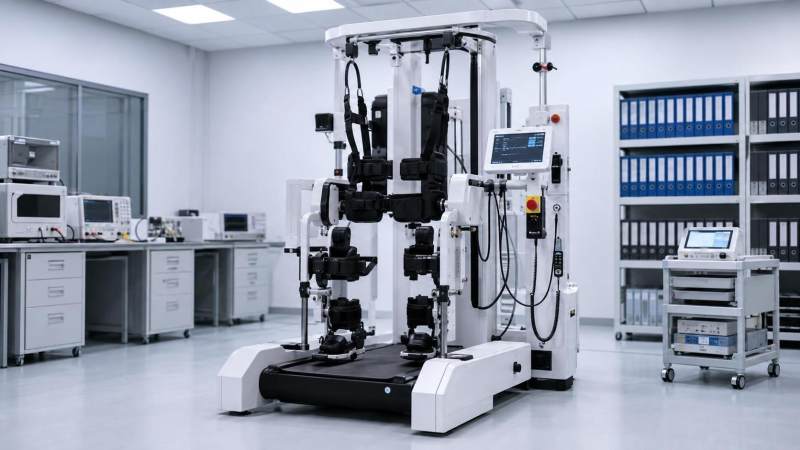
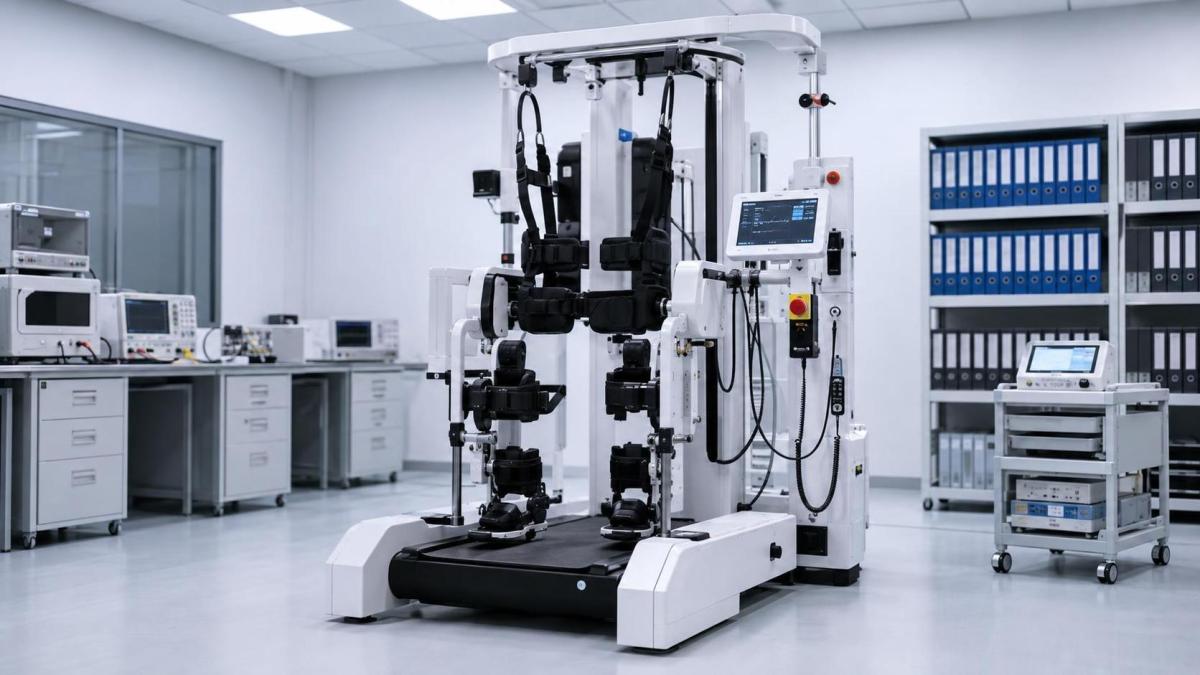
What are the latest CE MDR changes affecting rehabilitation equipment classification? The short answer is that the Medical Device Regulation (EU) 2017/745 has not created one entirely new classification category for rehabilitation technology. The more consequential change is the way classification must now be justified, documented, and maintained throughout the device lifecycle. For a basic manual walking aid, the practical impact may be limited. For an electrically powered wheelchair, functional electrical stimulation system, robotic gait trainer, cloud-connected therapy platform, or home-monitoring device, the classification analysis can be materially different from the approach used under the former Medical Device Directive (MDD).
That distinction matters because rehabilitation products increasingly sit at the boundary between mechanical support, active therapy, software, remote monitoring, and clinical decision support. A product can look like familiar rehabilitation equipment while its sensors, algorithms, connectivity, or automated treatment controls place it under a higher-risk rule. The regulatory question is not what the product is commonly called in a catalogue. It is what the manufacturer claims it does, how it works, and what could happen if it fails.
The main shift: classification is no longer a simple label exercise
Under CE MDR, classification remains based on intended purpose and the classification rules in Annex VIII. Yet the supporting evidence expected behind that decision is more demanding than many legacy files contain. A manufacturer should be able to show why each applicable rule was considered, why one rule takes precedence where several may apply, and how the product’s design features match the stated intended purpose.
In rehabilitation, a common weak point is a broad intended-purpose statement. “Supports mobility” and “assists patient rehabilitation” may sound harmless, but they are not interchangeable regulatory claims. A device intended only to provide physical support may follow a different route from one intended to deliver therapeutic energy, measure functional performance, recommend treatment adjustments, or automatically adapt resistance during therapy.
This is why classification should be reviewed alongside labelling, instructions for use, promotional language, software requirements, risk management, and clinical evaluation. If those documents describe different levels of clinical benefit or automation, a notified body is likely to notice the inconsistency.
Which MDR rules commonly affect rehabilitation devices?
There is no single “rehabilitation equipment rule.” The correct rule depends on the technology. Annex VIII is applied case by case, but several rules regularly arise in rehabilitation and home-care portfolios.
The examples above are not automatic classifications. A powered wheelchair, for instance, may be an active device, but it is not necessarily an active therapeutic device merely because it has motors, batteries, seat adjustment, and obstacle detection. The intended medical purpose and the device’s role in treatment remain central. Conversely, a seemingly modest wearable may become a more complex regulatory product if it interprets movement data and directs clinical care.
Why connected rehabilitation software has changed the discussion
Software is where many rehabilitation classifications have become harder under MDR. The regulation’s Rule 11 gives explicit attention to software that provides information used to make decisions for diagnostic or therapeutic purposes. The risk class is linked to the impact of an incorrect decision: information that could lead to death or irreversible deterioration may fall into Class III; serious deterioration or surgical intervention may lead to Class IIb; other decision-support software is generally Class IIa.
The practical dividing line is often misunderstood. Recording step counts, range-of-motion measurements, or exercise completion for a patient’s own reference is not the same as recommending a therapy change. A portal that merely displays data is not equivalent to software that tells a clinician to increase stimulation intensity, reduce weight-bearing, or escalate a patient for review. The second function is closer to a therapeutic decision pathway, even if the recommendation is presented through a simple dashboard.
Manufacturers should also avoid assuming that a “clinician remains in the loop” statement resolves the issue. Human oversight is relevant, but it does not erase the role of software if the user is expected to rely on the output for treatment. The real analysis should examine the information flow, the foreseeable use environment, the training level of the user, and the potential harm if the output is wrong, delayed, unavailable, or misunderstood.
What changed for legacy MDD rehabilitation devices?
For products previously certified under the MDD, the transition provisions are often more urgent than the classification rule itself. Regulation (EU) 2023/607 extended certain MDR transition periods for qualifying legacy devices. Depending on the device class and conditions, relevant deadlines can extend to 26 May 2026, 26 May 2027, or 26 May 2028. These dates should never be treated as a blanket permission to continue selling every existing rehabilitation product.
The extension is conditional. Broadly, the device must meet the applicable legacy certification requirements, must not present an unacceptable risk, and must not undergo a significant change in design or intended purpose. Manufacturers also needed to meet specified MDR quality-management and notified-body application milestones. The exact legal route can depend on the status and expiry of the prior certificate, so the device file and notified-body correspondence need to be checked rather than inferred from a product’s catalogue status.
This creates a particularly sensitive issue for rehabilitation products that have been digitally upgraded. Adding remote monitoring, changing the treatment algorithm, introducing automatic settings, or expanding a claim from “exercise assistance” to “rehabilitation treatment” may be commercially logical. It may also amount to a significant design or intended-purpose change that disrupts reliance on a legacy-device transition pathway.
Does a higher MDR class always mean the device became more dangerous?
Not necessarily. A higher class usually reflects the regulatory significance of the device’s mode of action and the consequence of failure, not a judgement that the product is inherently unsafe. A gait-training platform that actively controls a patient’s movement may require more robust evidence than a passive frame because loss of control, inappropriate force, or incorrect settings can create a different harm profile.
The class also affects the conformity-assessment route. Class I devices may, in many cases, be self-declared by the manufacturer, although sterile, measuring, and reusable surgical instruments have specific notified-body involvement. Class IIa, IIb, and III devices require notified-body assessment. For rehabilitation developers accustomed to a low-risk mechanical-device model, the jump in documentation work can be substantial once software or therapeutic energy is introduced.
What evidence should support the classification decision?
A defensible classification rationale is more than a one-page statement saying “Class IIa under Rule 9.” It should connect the rule to the actual product. That means identifying every active function, energy source, patient-contact component, measurement function, software module, connectivity feature, and intended user. It should also explain why more stringent rules do not apply.
For a connected rehabilitation system, the technical documentation should make clear which functions are medical-device functions and which are administrative or wellness features. This separation is not cosmetic. It affects software validation scope, cybersecurity controls, clinical evidence planning, post-market surveillance, and the claims that can responsibly appear in sales materials.
The classification rationale should remain aligned with ISO 14971 risk-management documentation, usability engineering, electrical safety and electromagnetic compatibility evidence where relevant, and the clinical evaluation. If the risk file discusses stimulation burns, falls, unintended movement, or delayed intervention, but the classification file describes the device as only a comfort aid, the regulatory story is unlikely to hold together.
A practical review sequence before product launch or procurement
A useful starting point is to review the device as it will actually be supplied, not as the engineering team first conceived it. Include accessories, mobile apps, cloud services, replacement electrodes or supports, data interfaces, and any optional modules enabled after purchase. In rehabilitation, optional software features often create the decisive classification issue.
- Freeze the intended purpose before selecting a rule, including patient population, clinical setting, user type, and treatment or monitoring claims.
- Map each function to Annex VIII, then apply the rule that produces the highest class if multiple rules are relevant.
- Assess whether software only records or communicates information, or whether it influences therapeutic or diagnostic decisions.
- For legacy devices, review every planned change against the MDR transition conditions before implementation.
- Check that the declaration of conformity, labels, instructions, risk file, clinical evidence, and commercial claims all describe the same device.
Procurement and clinical engineering teams can use the same logic when comparing products. A CE mark alone does not explain whether a device’s connected functions, accessories, or intended setting were included in the conformity assessment. Asking for the declaration of conformity, applicable classification, intended purpose, and current certificate status is usually more informative than relying on a general compliance statement.
The classification question should be revisited, not filed away
The most useful answer to “What CE MDR changes affect rehabilitation equipment classification?” is therefore not a single class number. MDR has raised the standard for showing why that number is correct, especially where rehabilitation technology combines therapy, measurement, automation, and connected software. The classification analysis should be treated as a living regulatory position that is revisited when claims, algorithms, accessories, patient groups, or use environments change.
For organisations evaluating complex medical technology, independent technical repositories such as Global Medical & Life Sciences (G-MLS) can help place device claims beside the relevant regulatory, engineering, and clinical context. In a field where a software update can alter the regulatory profile of a familiar therapy device, verifiable documentation is more valuable than a broad assurance that the product is “MDR compliant.”
Recommended News
Metadata & Tools
Related Research
- Immunoassay Cross-Reactivity Metrics: Calculating Percentages and Assessing BiasMaster immunoassay cross-reactivity metrics: learn to calculate percentages, assess assay bias, and evaluate clinical impact with practical examples for better-informed decisions.
- Choosing a Lab Tools Supplier: Quality Checks, Lead Times, and Warranty TermsChoose a lab tools supplier with confidence. Discover how to verify quality, confirm lead times, and compare warranty terms to avoid costly delays and protect your lab’s budget.
- Choosing Interactive Pet Toys: Matching Size, Play Style, and Safety NeedsExplore nteractivepettoys matched to your pet’s size, play style, and safety needs. Compare puzzles, treat dispensers, and moving toys to choose smarter and make playtime more rewarding.
- NGS Sequencing Cost Benchmark Report: Comparing Total Costs per SampleNGS sequencing cost benchmark report: compare total costs per accepted sample, uncover hidden expenses, and evaluate suppliers with confidence to make smarter procurement decisions.
- Diagnostic Imaging Market Outlook: Growth Opportunities in CT, MRI, and UltrasoundExplore the diagnostic imaging market outlook for CT, MRI, and ultrasound. Discover growth opportunities, technology trends, and procurement insights to guide smarter healthcare investments.