
Lead Author
Institution
Published
Abstract
Are surgical technology advancements truly improving safety, or are they adding layers of technical risk? The answer is not binary. In modern operating environments, surgical technology advancements can reduce variability, sharpen visualization, and support faster intervention. Yet safety gains only materialize when devices, software, workflows, and compliance controls work together. For organizations evaluating capital equipment, digital surgery platforms, and integrated operating rooms, the real issue is not whether innovation exists, but whether it performs safely under clinical, technical, and regulatory pressure.
That is why a checklist-based evaluation matters. Surgical safety is no longer defined only by surgeon skill or device specifications. It also depends on interoperability, validation evidence, maintenance traceability, cybersecurity, training burden, and post-market monitoring. In other words, surgical technology advancements should be judged as systems, not isolated products.
Why surgical technology advancements require a structured safety checklist
New platforms often promise smaller incisions, lower blood loss, better navigation, and more consistent outcomes. These benefits are credible in many specialties. Robotic assistance, intraoperative imaging, smart energy devices, and AI-supported planning have already changed operating standards.
However, complexity can shift risk rather than remove it. A safer instrument can still fail within a poorly integrated workflow. An advanced visualization system can still mislead if calibration drifts. A connected operating room can still create downtime if software updates interrupt compatibility. This is why surgical technology advancements must be reviewed through a disciplined, evidence-based lens.
Core checklist for evaluating whether surgical technology advancements improve safety
- Verify clinical evidence across procedure types, patient risk groups, and institutions, rather than relying on single-center studies or vendor performance claims.
- Confirm compliance with ISO 13485, FDA requirements, CE MDR, and applicable electrical, sterility, and software lifecycle standards.
- Assess interoperability with imaging systems, anesthesia records, surgical navigation, sterilization workflows, and hospital network architecture before procurement decisions.
- Measure human factors, including console ergonomics, alert design, screen layout, handoff clarity, and cognitive load during urgent events.
- Review failure modes, backup procedures, manual override capability, and conversion pathways if the technology becomes unavailable mid-procedure.
- Audit maintenance intervals, parts availability, calibration controls, service response times, and uptime performance under real clinical schedules.
- Test data integrity, cybersecurity safeguards, user permissions, and audit logs for any connected platform handling procedural or patient information.
- Validate training depth by tracking competency progression, simulation exposure, credentialing thresholds, and retention after initial implementation.
- Compare safety outcomes against workflow disruption, setup time, room turnover, and additional staffing demands introduced by the technology.
- Monitor post-market feedback, adverse event trends, software update history, and field corrective actions to detect unresolved safety signals.
Where surgical technology advancements are improving safety most clearly
Robotic-assisted surgery
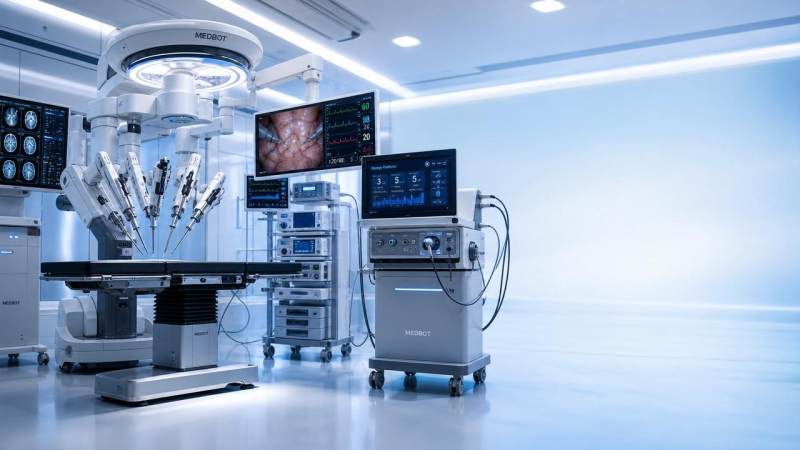
Robotic systems can improve precision, tremor control, and access in confined anatomy. In urology, gynecology, and selected general surgery procedures, surgical technology advancements in robotics often support more consistent dissection and better visualization.
Safety gains depend on setup discipline and team familiarity. Docking errors, instrument misuse, or delayed conversion can offset technical benefits. The robotic platform is safest when simulation, checklists, and clear troubleshooting pathways are built into routine practice.
Image-guided and navigated procedures
In neurosurgery, orthopedics, and interventional environments, image-guided systems help localize anatomy with greater confidence. Surgical technology advancements in real-time imaging can reduce wrong-site risk, improve implant positioning, and support less invasive access.
Still, image quality alone does not guarantee safety. Registration accuracy, calibration stability, and latency control matter as much as hardware resolution. A highly advanced imaging stack becomes unsafe if accuracy drifts are not detected promptly.
Smart energy and vessel sealing devices
Modern energy platforms have improved hemostasis and shortened procedural steps. Better thermal control can reduce collateral tissue damage, especially during minimally invasive procedures where visual margins are limited.
Yet these surgical technology advancements require close review of thermal spread data, insulation integrity, and compatibility with other OR equipment. Safety depends on controlled power delivery and disciplined inspection before every case.
Integrated operating rooms and digital workflow tools
Integrated OR platforms can centralize video routing, imaging access, documentation, and device control. When executed well, these surgical technology advancements reduce communication gaps and limit avoidable delays during critical moments.
The tradeoff is dependence on software reliability and network resilience. A seamless digital workflow can quickly become a vulnerability if access permissions, system redundancy, or update governance are poorly managed.
Commonly overlooked risks behind surgical technology advancements
Training is underestimated
Many safety problems emerge during adoption, not mature use. Even validated surgical technology advancements introduce new gestures, interfaces, alarm logic, and failure responses. Initial onboarding is not enough. Ongoing competency checks are essential.
Interoperability is assumed
Devices may function well independently but fail within mixed-vendor environments. Video standards, data exports, network protocols, and accessory compatibility should never be assumed. Integration testing is a patient safety issue, not merely an IT task.
Downtime planning is weak
A technology that improves normal-case performance may still create severe risk during failure. Backup instruments, manual alternatives, and rapid service escalation should be documented before the first live procedure.
Cybersecurity is treated as secondary
Connected systems now influence visual guidance, records, and operational continuity. Cyber weakness can become clinical weakness. Surgical technology advancements must be reviewed for patch policy, access control, and incident response readiness.
Practical execution steps for safer adoption
- Build a cross-functional review matrix covering clinical evidence, engineering validation, sterilization impact, software support, and regulatory documentation.
- Run simulated cases before go-live to test setup time, staff coordination, failover actions, and alarm interpretation under realistic pressure.
- Define measurable safety indicators, including conversion rates, equipment-related delays, adverse events, and procedure-specific complication trends.
- Require documented service commitments for uptime, spare parts, remote diagnostics, calibration traceability, and software version control.
- Reassess performance quarterly using incident reviews, user feedback, and standards updates rather than treating implementation as complete.
Final assessment: are surgical technology advancements improving safety?
Yes, surgical technology advancements are improving safety in many settings, but not automatically. Their value is strongest when precision hardware, validated software, human factors engineering, and compliance controls are aligned. The safest technologies are not simply the newest. They are the best verified, best integrated, and best supported over time.
A practical next step is to evaluate every major platform against a structured safety checklist before approval, during rollout, and after implementation. That approach turns surgical technology advancements from impressive features into measurable safety infrastructure. In a field shaped by both innovation and accountability, disciplined validation remains the clearest path to better outcomes.
Recommended News
Metadata & Tools
Related Research
- Portable Physiotherapy Equipment Wholesale: How to Compare Product Range, Certifications, and MOQPortable physiotherapy equipment wholesale guide: compare product range, certifications, and MOQ to reduce sourcing risk, improve compliance, and choose scalable suppliers with confidence.
- ICU Monitor ECG Benchmarks Explained: Which Parameters Matter for Device Comparison?ICU monitor ECG benchmarks explained: compare signal accuracy, noise rejection, alarm latency, and compliance factors to choose reliable ICU devices with confidence.
- Laboratory Equipment Specification Guide: How to Read Capacity, Accuracy, and Utility NeedsLaboratory equipment specification guide to decode capacity, accuracy, and utility needs. Learn how to compare specs wisely, avoid costly mistakes, and choose lab systems that fit real workflows.
- How to Evaluate a Lab Automation System for GMP: Compliance, Workflow, and ValidationLab automation system GMP evaluation starts with compliance, workflow fit, and validation readiness. Learn what to check before buying to reduce risk and choose with confidence.
- Banquet Chairs Buying Guide: Frame Materials, Stackability, and Venue Usebanquetchairs buying guide covering steel vs. aluminum frames, stackability, venue fit, and lifecycle cost—compare smarter and choose chairs that cut labor, last longer, and look professional.