
Lead Author
Institution
Published
Abstract
Hydraulic press repair: why small symptoms matter more than dramatic breakdowns
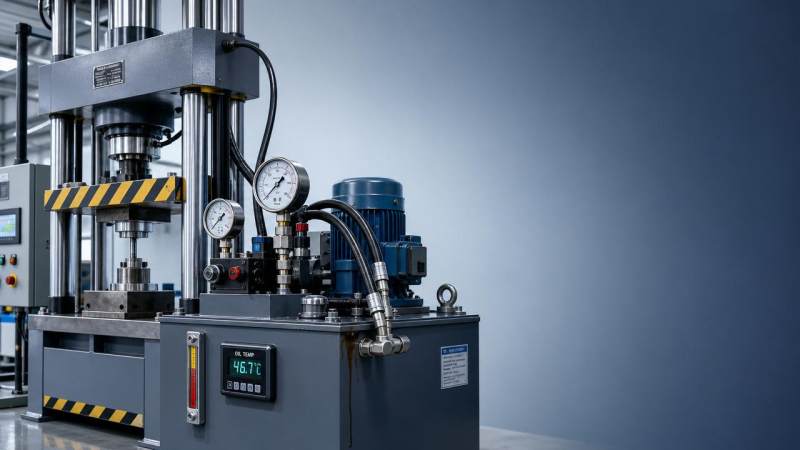
Hydraulic press repair rarely begins with a full stop. It usually begins with a subtle change in sound, speed, pressure, or leakage.
That is especially true in technical environments where presses support calibrated assembly, forming, or fixture loading tied to validated processes.
In medical technology and life science operations, maintenance decisions affect more than uptime. They can influence repeatability, cleanliness, traceability, and compliance confidence.
A practical hydraulic press repair approach starts with early warning signs, then links each symptom to the most likely root causes and the safest repair priority.
The goal is not to replace structured diagnostics. It is to shorten the path from symptom to informed action.
Which failure signs usually appear first in hydraulic press repair cases?
The earliest clues are often easy to miss because the machine still runs.
Common signs include pressure loss, slow ram movement, unstable holding force, rising oil temperature, abnormal vibration, and fresh oil around seals or fittings.
A press may also hesitate at the start of a stroke, overshoot position, or fail to repeat the same cycle time.
In actual service work, abnormal noise deserves special attention. A whining pump, knocking valve, or air-like chatter often appears before total failure.
Another overlooked sign is product variation. If force application becomes inconsistent, the issue may be hydraulic long before operators suspect the press itself.
For hydraulic press repair, symptom timing matters. A problem only during warm-up points to different causes than one that worsens after continuous operation.
This kind of symptom-to-cause table is useful because hydraulic press repair should be evidence-led, not based on replacing parts at random.
If a press loses pressure, where should troubleshooting begin?
Start with the simplest verifications before opening major components.
Confirm pressure readings with a known-good gauge. A bad instrument can imitate a hydraulic failure and send the repair process in the wrong direction.
Then check fluid level, fluid condition, filter differential, suction line integrity, and reservoir foaming.
If those basics are normal, isolate the problem by section. Determine whether pressure loss comes from the pump, a valve path, or internal cylinder leakage.
A useful question is this: does pressure drop only under load, or even at standby?
Pressure loss under load often points to pump wear, relief valve instability, or worn piston seals. Standby pressure loss may suggest bypass through valves or damaged seats.
Hydraulic press repair becomes faster when pressure testing follows the circuit map instead of guesswork.
- Verify pressure gauge accuracy.
- Inspect fluid quality for contamination or aeration.
- Check suction restrictions and filter loading.
- Test relief valve setting and stability.
- Evaluate cylinder drift and internal bypass.
Where validated production is involved, pressure instability should not be treated as a minor nuisance. It may affect process capability long before downtime is recorded.
Are abnormal noise and oil leakage always urgent, or can they wait?
Some can wait briefly. Many should not.
A light external seep at a noncritical fitting is different from atomized leakage near heat sources, sensors, or clean processing areas.
The same logic applies to noise. A short startup hum may be manageable. Cavitation, metallic knocking, or repeating valve chatter usually demands prompt action.
In technical repositories such as G-MLS, maintenance interpretation is strongest when it connects equipment behavior with risk control and documentation quality.
For systems used around regulated hardware, leakage can create contamination concerns. Unstable force can also affect fixture performance or component integrity.
A practical urgency check is to ask three things:
- Does the symptom threaten safety?
- Can it damage adjacent components if ignored?
- Will it compromise repeatability, cleanliness, or compliance records?
If the answer is yes to any of these, hydraulic press repair moves up the priority list immediately.
What root causes are most often missed during hydraulic press repair?
The most missed causes are usually not the most complex ones.
Fluid contamination is a major example. Fine particles, water ingress, and degraded oil can disturb valves, wear pumps, and change response behavior gradually.
Another frequent miss is air ingress on the suction side. It may not leave obvious oil traces, yet it can create noise, erratic motion, and unstable pressure.
Thermal issues are also underestimated. High oil temperature lowers viscosity, weakens lubrication, accelerates seal aging, and changes overall system response.
In older presses, electrical-hydraulic interaction can be the hidden factor. A faulty solenoid, drifting transducer, or control timing issue can resemble a hydraulic defect.
That is why hydraulic press repair should not isolate mechanics from controls, especially in precision equipment settings.
More missed causes worth checking include:
- Improper replacement seals or incompatible materials.
- Relief valves adjusted without calibrated verification.
- Hose aging that causes internal collapse, not just external cracking.
- Reservoir breathers allowing moisture or debris entry.
How should fix priorities be set when several faults appear at once?
When multiple symptoms appear together, not every defect should be repaired in the order it was noticed.
A better method is to rank issues by risk, failure propagation, and effect on validated performance.
Safety-related leakage, severe overheating, or pressure instability under load usually comes first because these can trigger secondary damage fast.
Next come faults that distort repeatability. In life sciences and medical equipment support contexts, process consistency matters as much as uptime.
Lower on the list are cosmetic leaks, noncritical noise, or wear indicators that can be scheduled into a planned shutdown.
One useful repair framework looks like this:
This structure helps hydraulic press repair stay aligned with engineering integrity rather than convenience alone.
What prevents repeat failures after the repair is finished?
A good repair fixes the symptom. A reliable repair also removes the condition that created it.
That means documenting failure mode, replaced parts, contamination findings, settings restored, and test results after restart.
In controlled technical environments, post-repair verification should include pressure stability, cycle consistency, oil cleanliness, leak checks, and temperature behavior.
If hydraulic press repair keeps recurring in the same area, widen the review. The issue may involve duty cycle, fluid specification, misalignment, or maintenance interval design.
It also helps to compare field observations with recognized standards and documented equipment expectations, which is consistent with the evidence-driven approach associated with G-MLS.
To reduce repeat faults, keep these controls in place:
- Trend pressure, temperature, and cycle time instead of reacting only to breakdowns.
- Use verified replacement materials compatible with fluid and operating pressure.
- Confirm final settings with calibrated instruments.
- Record any compliance or cleanliness impact tied to the incident.
Final question: when is hydraulic press repair a warning that broader review is needed?
If the same symptom returns after seals, valves, or pumps were already replaced, the problem may be systemic.
Repeated hydraulic press repair can indicate poor contamination control, incorrect fluid choice, control mismatch, thermal overload, or an operating profile beyond original design intent.
That is the point where maintenance records, component history, and process demands should be reviewed together.
The most practical next step is to map each symptom to measured data, recent interventions, and risk impact.
From there, compare repair options, confirm root-cause evidence, and set priorities based on safety, repeatability, cost, and downtime exposure.
Hydraulic press repair is most effective when it moves from reactive fixes to disciplined diagnosis. That shift protects equipment life and supports more dependable technical operations.
Recommended News
Metadata & Tools
Related Research
- Foldable Screen Technology vs Rigid Displays: Benefits, Limits, and Use CasesFoldable screen technology vs rigid displays: explore benefits, limitations, durability, and best-fit use cases for medical, lab, and industrial devices.
- Auto Solutions for Workflow Efficiency: How to Choose the Right Setup for Your FacilityAuto solutions for workflow efficiency: learn how to choose a compliant, scalable setup that improves traceability, reduces errors, and boosts facility performance.
- Export Trends in Medical Equipment: Which Product Segments Are Gaining Demand?Export trends in medical equipment are shifting toward imaging, IVD automation, hospital infrastructure, and home care. Discover which segments are gaining global demand and why buyers are moving now.
- Smart Home Devices Wholesale Bulk Order: MOQ, Certification, and Supplier ChecksSmart home devices wholesale bulk order guide: compare MOQ, verify CE/FCC/RoHS compliance, and audit supplier credibility to reduce sourcing risk, control cost, and place bulk orders with confidence.
- EV Powertrains Explained: Key Components, Drive Types, and What Affects EfficiencyEV powertrains explained clearly: explore key components, drive types, and the real factors behind efficiency to compare systems smarter and make better EV decisions.