
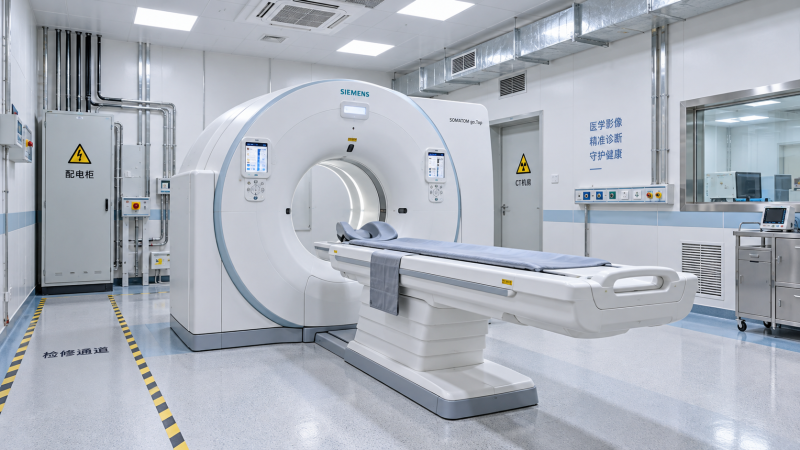
What are the common pitfalls when selecting diagnostic equipment for radiology? The greatest risks usually involve clinical mismatch, hidden ownership costs, workflow disruption, and inadequate support.
For hospital procurement teams and clinical leaders, selecting the right system requires more than comparing specifications. Equipment must deliver reliable diagnostic performance within real operational constraints.
A lower purchase price can conceal expensive installation requirements, restrictive software licenses, or prolonged downtime. Conversely, premium features offer little value without relevant clinical demand.
Image quality, radiation dose management where applicable, and jurisdiction-specific regulatory requirements also need scrutiny. Weaknesses in these areas can compromise patient care and operational sustainability.
This guide prioritizes the decisions that matter to procurement directors, radiology leaders, medical physicists, and engineers: clinical suitability, lifecycle economics, integration, serviceability, and verifiable compliance.
1. Buying Impressive Specifications Without Defining Clinical Needs
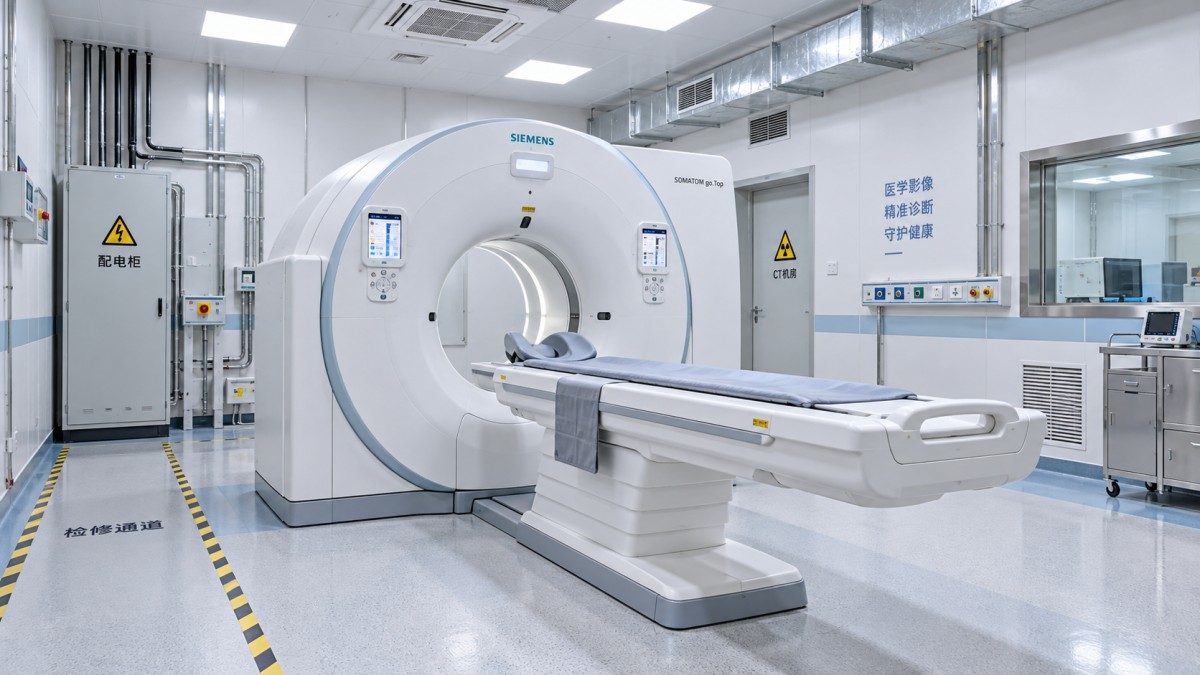
The first procurement mistake is choosing a scanner before defining its clinical purpose. A system suited to routine outpatient imaging may struggle with emergency workloads.
Begin with the examinations your organization performs, anticipated patient volumes, referral patterns, and required diagnostic capabilities. Separate essential functions from features supporting uncertain future demand.
For CT, evaluate relevant acquisition speed, coverage, reconstruction options, and protocol performance. Detector specifications alone do not establish suitability for cardiac, trauma, or oncology imaging.
For MRI, assess field strength alongside coil availability, sequence performance, patient access, and examination duration. A higher field strength does not automatically deliver greater operational value.
Ultrasound purchases require similar discipline. Probe selection, operator usability, specialty applications, and performance in difficult patients can matter more than an extensive list of software features.
Create a requirements matrix connecting each priority examination to measurable acceptance criteria. Include patient size, mobility limitations, infection prevention needs, and the available staffing model.
2. Comparing Purchase Prices Instead of Total Ownership Costs
The quoted equipment price rarely represents the complete investment. Procurement teams should compare lifecycle costs over a defined planning period using consistent assumptions across competing proposals.
Include site preparation, delivery, installation, commissioning, acceptance testing, staff training, maintenance, software subscriptions, energy consumption, and eventual decommissioning. Identify which expenses are excluded from quotations.
Modality-specific costs can change the financial picture substantially. CT tube replacement, MRI cooling arrangements, ultrasound probes, and detector replacement deserve explicit treatment in the cost model.
Ask whether essential applications require separate licenses and whether charges recur annually. Clarify workstation quantities, user access, upgrade entitlement, and additional fees for connectivity components.
Consider revenue and capacity realistically. Base utilization forecasts on referral demand, staffing availability, payer conditions, examination mix, and achievable scheduling performance rather than vendor throughput claims.
Calculate cost per completed examination using realistic annual volume and operating expenses. Model lower utilization and major component replacement to test whether affordability survives adverse conditions.
3. Discovering Installation Constraints After Signing the Contract
A technically suitable system can become an expensive project if the building cannot accommodate it. Site feasibility should be established before contractual commitments become difficult to revise.
Review room dimensions, equipment access routes, floor loading, electrical supply, cooling, ventilation, network connections, and maintenance clearances. Assign responsibility for each modification and associated approval.
For MRI, evaluate magnetic field safety, controlled access, radiofrequency shielding, and cooling or cryogen arrangements appropriate to the system. Requirements vary substantially between equipment designs.
For X-ray systems and CT, involve qualified radiation protection specialists in shielding design. Room suitability depends on workload, equipment characteristics, occupancy, and applicable local requirements.
Demand a documented site survey and a coordinated installation plan. Include construction dependencies, delivery restrictions, testing milestones, and contingency arrangements for delays affecting clinical services.
Make responsibility boundaries explicit. When construction contractors, equipment suppliers, and hospital engineers assume another party owns an interface, avoidable delays and change orders often follow.
4. Trusting Demonstrations Without Testing Diagnostic Performance
Vendor demonstrations usually show equipment under favorable conditions. Attractive images from selected patients do not establish performance across your examination mix, patient population, or staffing conditions.
Evaluate representative clinical tasks using agreed protocols, suitable phantoms, and appropriately governed clinical demonstrations where feasible. Include radiologists, technologists, and medical physicists in the assessment.
For ionizing radiation modalities, assess image quality together with dose. Comparing dose figures without accounting for patient size, protocol settings, and diagnostic requirements can mislead decision-makers.
Review automatic exposure controls, protocol management, dose reporting, and access to examination-level dose information. Confirm that staff can configure and monitor these functions in practice.
MRI and ultrasound do not use ionizing radiation, but they still require modality-specific safety controls. Assess relevant operating limits, safety workflows, and staff training requirements.
Set contractual acceptance criteria before purchase. These should cover agreed performance, supplied configurations, required accessories, and documented testing, with a clear process for resolving deficiencies.
5. Assuming DICOM Compatibility Guarantees Seamless Integration
A statement that equipment supports DICOM does not prove it will integrate smoothly with your hospital. Compatibility depends on supported services, configurations, and actual workflow requirements.
Review the DICOM conformance statement with imaging informatics staff. Confirm required functions such as modality worklist, image storage, storage commitment, and relevant structured reporting capabilities.
Test the complete examination pathway: order receipt, patient identification, acquisition, transfer, reporting access, and archiving. Include corrections, canceled examinations, emergency patients, and network interruption scenarios.
Clarify responsibility for interfaces with the radiology information system, PACS, and electronic health record. Obtain written confirmation of implementation costs, testing responsibilities, and ongoing support.
Cybersecurity also belongs in procurement. Assess authentication, access controls, patching processes, supported operating systems, remote service connections, security logging, and the expected duration of software support.
Agree how vulnerabilities and upgrades will be managed without disrupting care. A connected scanner with unclear patch ownership can create persistent operational and information security risks.
6. Accepting Service Promises Without Enforceable Terms
Downtime affects patient access, referral relationships, staffing efficiency, and revenue. Service capability should therefore influence vendor selection as strongly as acquisition price and headline performance.
Distinguish a guaranteed response time from a restoration target. A technician answering promptly does not mean the equipment will return to clinical service within that period.
Examine local engineer availability, spare parts access, escalation procedures, remote diagnostics, and coverage outside normal working hours. Verify whether your location changes the promised service level.
Request references from facilities using comparable configurations and workloads. Ask about recurring faults, repair delays, software support, and whether service performance matches the contractual commitments.
Define uptime measurement, planned maintenance exclusions, and remedies for missed commitments. Check coverage for expensive components, travel, labor, and damage categories that insurers may treat differently.
For refurbished equipment, confirm condition, service history, parts availability, software licensing, and remaining manufacturer support. Lower acquisition costs require careful scrutiny of reliability and replacement exposure.
7. Treating Regulatory Labels as Complete Proof of Suitability
Regulatory status must match the equipment, intended use, configuration, and destination market. General statements about international compliance cannot replace verification of the specific device being purchased.
In the United States, verify the applicable FDA marketing authorization, such as clearance or approval. Establishment registration and device listing alone do not demonstrate marketing authorization.
For European procurement, examine applicable CE documentation, intended purpose, and the conformity assessment route. Where relevant, verify notified body involvement and documentation supporting lawful market placement.
ISO 13485 addresses medical device quality management systems. Certification can support supplier evaluation, but it does not independently establish a particular scanner’s diagnostic performance or market authorization.
Also check local requirements for installation, radiation protection, inspections, operator qualifications, and ongoing quality assurance. Device authorization does not replace a facility’s own operational obligations.
Request traceable documentation covering model identification, supplied options, safety instructions, recalls, and field safety notices. Review unresolved issues with clinical engineering and the appropriate regulatory specialists.
8. Overlooking Staff Capacity and Everyday Workflow
Equipment performance depends on people and processes. A technically advanced system may deliver limited benefit if staffing shortages, unfamiliar protocols, or scheduling constraints prevent effective use.
Measure the entire examination cycle, including preparation, positioning, acquisition, reconstruction, room turnover, and recovery where relevant. Scan time alone is an incomplete measure of throughput.
Evaluate usability with the technologists who will operate the equipment. Consider patient handling, interface clarity, ergonomic demands, protocol selection, and the steps required for routine examinations.
Training should cover practical competency, safety, troubleshooting, and protocol optimization. Specify initial instruction, follow-up support, training for new employees, and responsibility for maintaining documented competencies.
Assess whether advanced applications require specialist readers, additional technologists, or dedicated postprocessing time. Include those resources in the business case before assigning financial value to features.
Plan the transition from existing equipment carefully. Temporary referral arrangements, staged training, protocol validation, and realistic scheduling can reduce disruption while the team establishes stable performance.
9. Ignoring Upgrade Restrictions and Vendor Dependence
Radiology equipment remains in service through changing clinical expectations and software requirements. Procurement should examine how the system can evolve within a realistic operating lifespan.
Ask which upgrades require hardware replacement, additional licensing, or a new service agreement. Obtain support timelines and distinguish current capabilities from features appearing only on product roadmaps.
Assess data portability and access to stored examinations when contracts end. Proprietary processing tools or export restrictions can complicate migration and increase future switching costs.
Avoid purchasing speculative capacity without a credible utilization plan. Expansion options can be valuable, but their value depends on likely clinical demand and affordable implementation.
How to Make the Final Procurement Decision
Use mandatory requirements to eliminate unsuitable proposals before scoring attractive extras. Patient safety, necessary clinical performance, lawful supply, and feasible installation should function as decision gates.
Then compare eligible systems using weights agreed by procurement, radiology, clinical engineering, informatics, and finance. Give substantial weight to lifecycle costs, workflow performance, and service reliability.
Record the evidence behind each score: demonstration results, site surveys, integration tests, contractual commitments, and verified documentation. This makes the recommendation easier to review and defend.
The strongest radiology investment fits clinical demand, performs reliably, integrates into daily work, and remains affordable throughout ownership. Select the proposal whose evidence supports those outcomes.