
Lead Author
Institution
Published
Abstract
Choosing medical imaging equipment in 2026 requires more than comparing specs—it demands alignment with clinical innovation, medical device standards, and practical medical procurement goals. For researchers, operators, and decision-makers, the right system must support hospital infrastructure, integrate with IVD equipment and life science tools, and remain compatible with evolving home healthcare technology and biocompatible materials requirements.
That shift is especially important as imaging platforms are now evaluated across a wider operational context. A CT scanner, ultrasound system, digital radiography unit, or MRI installation no longer stands alone; it affects IT workflows, room design, infection control, staff training, maintenance planning, and even how data moves into laboratory and research environments.
For procurement teams and equipment users, the best purchase decision in 2026 is usually the one that balances 4 priorities at once: clinical fit, regulatory readiness, total lifecycle cost, and long-term interoperability. This article outlines a practical framework for choosing medical imaging equipment with fewer blind spots and stronger implementation outcomes.
Start with clinical use cases, not just equipment category
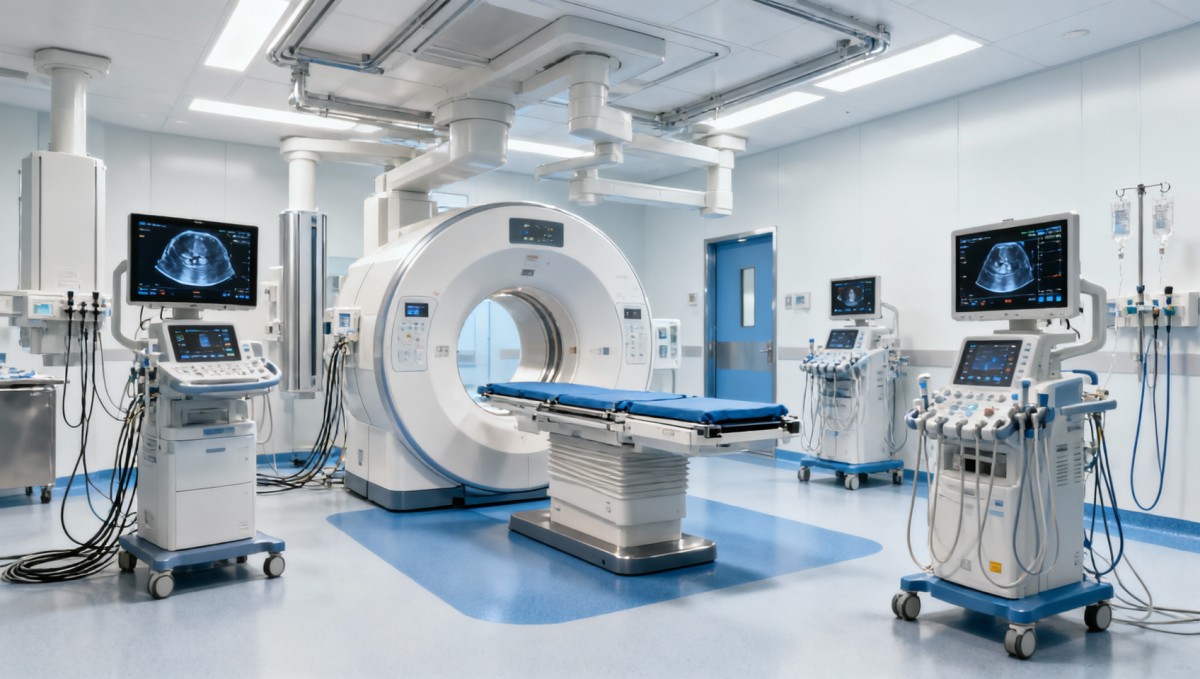
Medical imaging equipment selection often fails when buyers begin with brand preference or headline specifications instead of actual use cases. In 2026, facilities are under pressure to support faster diagnosis, higher throughput, and more precise image-guided decisions. That means the first question should be what the system must do in the next 3–5 years, not what it looks like on a product sheet.
A community hospital may prioritize robust digital radiography and mid-range ultrasound for high daily volume, while a tertiary center may need MRI, CT, and advanced visualization tools for oncology, neurology, and trauma. A research institute, by contrast, may emphasize image reproducibility, export formats, and compatibility with life science tools rather than only bedside speed.
Operators should also be included early. A system that performs well in theory can create delays if exam setup is complex, probe selection is confusing, or user interfaces require 6–8 extra steps per patient. Even a 2-minute delay per scan becomes significant across 30–60 studies per day.
Four practical screening questions
Before comparing vendors, define the operational profile of the department. This keeps the shortlist realistic and prevents overbuying or under-specification.
- What are the top 3 clinical indications the equipment must support in the first 12 months?
- What daily volume is expected: fewer than 15 exams, 15–40 exams, or more than 40 exams per day?
- Will the equipment be used by expert radiology staff only, or also by cross-trained clinicians and technicians?
- Does the system need to connect with PACS, RIS, LIS, EMR, or research data platforms from day one?
The answers shape the right level of imaging performance, workflow automation, and service support. They also help define whether premium options are clinically justified or simply attractive on paper.
Common modality fit by setting
The table below gives a practical starting point for matching medical imaging equipment to facility type and operational demand.
The key takeaway is that “best” medical imaging equipment is always context-dependent. A platform optimized for advanced neuroimaging may be inefficient for a facility whose main need is fast chest and trauma imaging with controlled operating costs.
Evaluate technical specifications through workflow and infrastructure impact
Once the use case is clear, the next step is translating specifications into operational value. Resolution, detector performance, field strength, dose management, software options, and reconstruction speed all matter, but only when linked to clinical workflow. A specification list without workflow mapping can mislead both procurement teams and end users.
For example, faster reconstruction times may reduce patient backlog if the department runs 20–50 scans per day. However, if room turnover, patient transport, or reporting delays are the real bottlenecks, investing heavily in one performance metric may produce limited return. Likewise, a portable ultrasound system with slightly lower advanced features may outperform a premium console if the actual demand is bedside access in emergency and ICU settings.
Infrastructure compatibility must be checked early. Imaging equipment may require room shielding, power stability, HVAC conditions, floor loading review, network capacity, and storage planning. In many projects, room readiness adds 4–12 weeks beyond equipment shipping, which affects procurement timelines more than buyers expect.
Core technical dimensions to verify
Performance and usability together
A technically strong system should improve both image quality and repeatability. For users, repeat scan rates, exam protocol consistency, and ergonomic controls can matter as much as peak imaging performance. If one system reduces repeat exams from 8% to 4%, that operational gain may be more valuable than a marginal increase in premium features.
Interoperability and data handling
DICOM compatibility is expected, but buyers should also review export formats, worklist integration, cybersecurity update policy, and interface options with PACS, RIS, EMR, and laboratory systems. In mixed environments, poor interoperability can create manual data re-entry, delayed reporting, and fragmented patient records.
Environmental and facility constraints
Temperature control, humidity tolerance, vibration sensitivity, and electrical load requirements can be decisive. A compact footprint may reduce renovation cost, while mobile systems may support temporary or decentralized care spaces. These details matter when equipment must fit both hospital infrastructure and expanding home healthcare technology ecosystems.
The following table helps convert technical comparison into a practical evaluation model.
A strong procurement review should score each dimension, not just compare headline specifications. That creates a decision path that clinical users, biomedical engineers, and finance teams can all defend.
Make compliance, serviceability, and lifecycle cost part of the purchase decision
Medical imaging equipment should be assessed over its full operating life, not only at the point of purchase. Capital cost is visible, but lifecycle costs often include installation, qualification, consumables, software licensing, preventive maintenance, spare parts, cybersecurity support, and user retraining over 5–10 years.
Compliance is equally important. Procurement teams should confirm whether documentation aligns with relevant pathways such as ISO 13485 manufacturing quality systems, FDA expectations where applicable, CE MDR market requirements, electrical safety standards, and local radiation or facility regulations. The exact route depends on market and modality, but documentation gaps can delay deployment or complicate audits.
Serviceability can determine uptime more than technical prestige. If a system requires imported parts with a 3–6 week lead time or only a small number of certified engineers are available in the region, the operational risk may outweigh any performance advantage. For departments with high patient volume, even 48 hours of unexpected downtime can disrupt schedules and revenue significantly.
Lifecycle cost categories buyers often underestimate
- Site preparation, including shielding, electrical work, ventilation changes, and floor reinforcement when required.
- Annual maintenance contracts, calibration visits, and software update fees after warranty expiration.
- Operator onboarding, refresher training every 6–12 months, and protocol standardization support.
- Consumables, accessories, replacement probes, coils, detectors, or image storage expansion.
- Downtime cost, including patient rescheduling, overtime staffing, and referral leakage.
A lower purchase price can become more expensive by year 3 if maintenance complexity, training burden, and service delays are not captured in the evaluation model.
Compliance and service review checklist
The table below shows a practical due-diligence structure for procurement teams reviewing medical imaging equipment vendors.
When these items are reviewed alongside performance, buyers get a far more accurate picture of value. This is particularly relevant for organizations that rely on verifiable data and cross-sector benchmarking, such as hospital engineering teams, laboratory heads, and medical technology researchers.
Build a structured procurement and implementation roadmap
Choosing medical imaging equipment is only half the project. The other half is successful implementation. A structured roadmap helps align stakeholders from radiology, biomedical engineering, IT, facilities, infection control, finance, and operations. In many institutions, delays happen because these groups are consulted too late rather than because the equipment itself is unsuitable.
A practical procurement process usually runs in 5 stages: needs definition, vendor prequalification, technical and commercial review, site readiness, and post-installation verification. Depending on modality complexity, the full cycle may range from 6–10 weeks for smaller systems to 4–9 months for large imaging installations with renovation requirements.
For users and operators, implementation quality affects long-term satisfaction. If protocol templates are not optimized, user permissions are poorly configured, or acceptance testing is rushed, the first 90 days can generate frustration that damages adoption and clinical confidence.
Recommended 5-step selection and deployment flow
- Define clinical objectives, expected exam volume, and integration needs across imaging, IVD equipment, and related digital systems.
- Create a weighted scorecard covering image quality, workflow fit, compliance, serviceability, lifecycle cost, and infrastructure readiness.
- Request vendor demonstrations using real or simulated use cases rather than generic presentations.
- Complete site surveys, utility checks, cybersecurity review, and installation planning before final purchase approval.
- Run acceptance testing, operator training, and 30-day to 90-day performance review after go-live.
This process reduces the risk of buying equipment that is technically capable but operationally mismatched. It also gives procurement teams a documented rationale that supports budget review and internal governance.
Frequent mistakes to avoid in 2026
Over-prioritizing specifications
A better detector, faster scan, or richer software package is not automatically the right investment if the department cannot fully use those capabilities. Match complexity to actual staffing, referral mix, and case volume.
Ignoring operator experience
If technologists or clinicians are excluded from evaluation, workflow pain points may only become visible after installation. That can increase exam time, repeat rates, and training costs.
Separating imaging from the broader technology ecosystem
In 2026, imaging equipment should be considered alongside hospital infrastructure, laboratory data, remote care pathways, and material compatibility requirements. Selection decisions are stronger when they reflect this full ecosystem view rather than a stand-alone device mindset.
FAQ for researchers, operators, and procurement teams
How do I know whether I should upgrade or replace existing imaging equipment?
Start with 4 indicators: uptime trend, image quality adequacy, integration limitations, and support availability. If service events are increasing, software support is ending within 12–24 months, or interoperability gaps are creating daily workflow friction, replacement may be more cost-effective than incremental upgrade.
What should operators pay most attention to during vendor evaluation?
Operators should focus on protocol setup time, interface logic, patient positioning workflow, accessory handling, reporting support, and training quality. Asking users to complete side-by-side tasks during a demo often reveals usability differences faster than a specification sheet can.
How long does installation usually take?
Smaller and mobile systems may be installed in a few days once the site is ready. Larger fixed modalities can require 2–8 weeks for installation and testing after room preparation is complete. If structural work, shielding, or network redesign is needed, the total project timeline may extend much further.
Which procurement documents are most useful for objective comparison?
A clear requirement matrix, weighted scorecard, site readiness checklist, service response matrix, and total cost model are highly effective. These documents help compare medical imaging equipment on measurable criteria rather than marketing language alone.
Selecting medical imaging equipment in 2026 requires a disciplined approach that connects clinical purpose, technical fit, compliance readiness, infrastructure impact, and long-term serviceability. The strongest decisions are made when procurement teams, operators, engineers, and researchers work from the same evidence-based framework rather than isolated priorities.
For organizations that need deeper benchmarking across imaging systems, laboratory equipment, hospital infrastructure, and life science technologies, a structured intelligence source can shorten evaluation cycles and reduce decision risk. To explore tailored selection criteria, compare solution paths, or review procurement-focused recommendations, contact G-MLS for a customized consultation and learn more about practical medical technology solutions.
Recommended News
Metadata & Tools
Related Research
- Where to Find Reliable Product Information Resources for Chemicals and How to Verify ThemProduct information resources for chemicals: learn where to find reliable data, how to verify SDS, TDS, COA, and regulatory records, and avoid costly compliance and sourcing mistakes.
- Industrial PC OEM Wholesale: How to Evaluate Suppliers, MOQs, and Customization?Industrial PC OEM wholesale guide: learn how to evaluate suppliers, compare MOQ terms, and define real customization to reduce risk, control costs, and choose a reliable partner.
- How to Build a Secure Industrial IoT System: Key Risks, Architecture, and ControlsSecure industrial IoT starts with the right architecture. Explore key risks, layered controls, and practical steps to build resilient, compliant, and trustworthy connected systems.
- How to Choose Precision Tools for Medical Assembly and Inspection TasksPrecision tools for medical assembly and inspection must deliver traceability, repeatability, and compliance. Learn how to choose the right options for accurate, audit-ready production.
- CT Radiation Dose Optimization: Key Strategies to Improve Image Quality SafelyCT radiation dose optimization explained: discover practical strategies to reduce unnecessary exposure, protect image quality, and support safer, smarter CT decisions.