
Lead Author
Institution
Published
Abstract
Understanding lab freezer temperature recovery time is essential for protecting samples, validating equipment performance, and reducing compliance risk. For lab managers, operators, procurement teams, and technical evaluators, the key takeaway is simple: recovery time is not just a technical specification. It directly affects sample integrity, workflow stability, alarm frequency, energy performance, and the confidence you can place in a freezer under real operating conditions. This guide explains the concept in practical terms and shows how to evaluate it alongside other meaningful performance indicators such as cell counter viability accuracy, spectrophotometer wavelength accuracy, and automated pipetting CV.
What lab freezer temperature recovery time really means
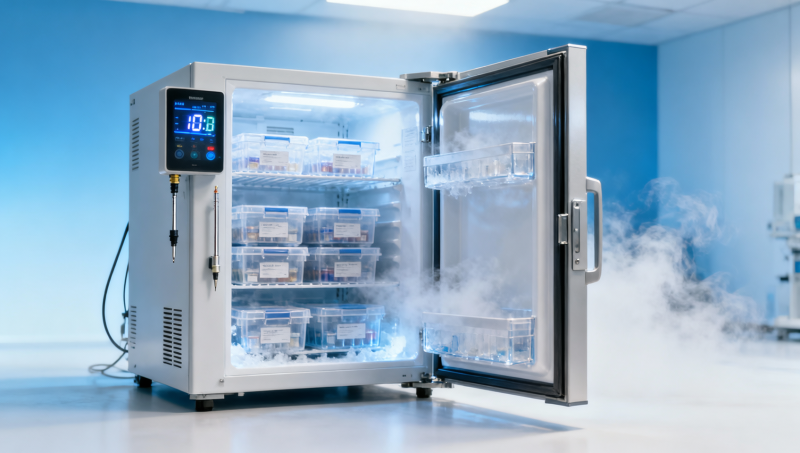
Lab freezer temperature recovery time refers to how long a freezer takes to return to its target temperature range after the door has been opened or after a warm load has been placed inside. In simple terms, it measures how quickly the unit regains control after a disturbance.
This matters because a freezer does not operate in a perfectly static environment. In real labs, doors are opened, racks are moved, new samples are added, and ambient conditions change. A freezer that recovers slowly may expose samples to avoidable temperature excursions, especially in high-use environments.
For most readers, the practical question is not “What is recovery time?” but rather “How much recovery time is acceptable for my samples, workflow, and compliance needs?” The answer depends on what you store, how often the door is opened, and how strictly your process must control temperature stability.
Why this metric matters more than many buyers first expect
Temperature recovery time is often overlooked during equipment comparison because buyers focus on storage volume, setpoint range, or purchase price. But from an operational and risk perspective, recovery time can be one of the most meaningful indicators of actual performance.
A fast and stable recovery profile helps support:
- Sample protection: Reduced time outside the target range helps preserve sensitive reagents, biological materials, controls, and research samples.
- Process consistency: Frequent temperature drift can introduce variability into lab workflows.
- Alarm management: Poor recovery can trigger nuisance alarms and staff intervention.
- Compliance confidence: Better control supports documentation for audits, validation, and internal quality programs.
- Operational efficiency: Units that recover predictably are easier to manage in busy labs.
For procurement teams and technical evaluators, this means recovery time should be read as a performance and risk-control metric, not a minor convenience feature.
What affects freezer temperature recovery time in real lab use
Recovery performance depends on more than the compressor alone. Several design and usage factors shape how quickly a freezer can stabilize after disruption.
- Door opening frequency and duration: The more often and longer the door is open, the more warm air enters the chamber.
- Load type and load temperature: Introducing a warm load requires more energy removal than returning from a simple door-open event.
- Freezer setpoint: Ultra-low temperatures generally require more demanding recovery performance than standard cold storage.
- Insulation quality: Better insulation reduces heat ingress and helps maintain stability.
- Airflow design: Internal circulation and shelf layout influence temperature uniformity and recovery speed.
- Ambient room conditions: High room temperature or poor ventilation can reduce cooling efficiency.
- Frost buildup and maintenance condition: Dirty filters, poor seals, and excessive frost can slow system response.
This is why a manufacturer’s published figure should never be viewed in isolation. Readers should always ask under what test conditions that recovery time was measured.
How to interpret recovery time specifications without being misled
Not all recovery claims are directly comparable. One supplier may report the time to return to setpoint, while another may report the time to return to a broader acceptable range. Some tests may be performed empty, while others use a loaded chamber. These differences can make one freezer appear better on paper even when the comparison is not equivalent.
When reviewing specifications, ask these questions:
- What was the starting setpoint?
- How long was the door open?
- Was the chamber empty, partially loaded, or fully loaded?
- What ambient temperature was used during testing?
- Was recovery measured to exact setpoint or to a tolerance band?
- Where were the probes placed inside the chamber?
For quality, engineering, and procurement teams, these details are essential. Without them, recovery time is only a marketing number.
What is a good recovery time for different lab scenarios?
There is no single universal “good” recovery time. The right benchmark depends on the storage application and risk profile.
For routine laboratory storage: Moderate recovery performance may be acceptable if contents are relatively stable and access frequency is low.
For high-throughput labs: Faster recovery becomes more important because repeated door openings can accumulate thermal stress.
For temperature-sensitive biologicals, enzymes, or validated materials: Tighter control and faster return to target conditions are generally preferred.
For regulated environments: The expectation is often not only fast recovery, but documented, repeatable, and validated recovery behavior.
In practice, decision-makers should evaluate both speed and stability. A unit that cools aggressively but overshoots or creates uneven internal zones may not be better than one with slightly slower but more controlled recovery.
Why recovery time should be reviewed together with temperature uniformity and stability
Recovery time is only one part of freezer performance. A unit may recover quickly at one sensor point while still showing poor uniformity across shelves or unstable cycling after recovery. That is why technical assessment should also include:
- Temperature uniformity: How evenly temperature is maintained throughout the chamber.
- Temperature stability: How much the temperature fluctuates over time at a fixed point.
- Pull-down time: How long the freezer takes to cool from ambient to target temperature during startup.
- Alarm response and logging: How clearly the unit records and communicates excursions.
This broader evaluation is similar to how labs assess other instruments. For example, cell counter viability accuracy is not judged by speed alone. Spectrophotometer wavelength accuracy is not judged by interface design alone. Automated pipetting CV is not judged by throughput alone. In each case, meaningful performance depends on control, repeatability, and fitness for purpose. Lab freezer recovery time should be assessed the same way.
Operational risks of poor temperature recovery
Slow or inconsistent recovery can create problems that extend well beyond the freezer itself.
- Sample degradation risk: Sensitive materials may lose viability, potency, or analytical reliability.
- Hidden quality drift: Even if materials are not visibly damaged, repeated micro-excursions can affect downstream consistency.
- Workflow disruption: Staff may need to wait before accessing contents again or respond to repeated alarms.
- Validation and audit concerns: Poorly documented performance can weaken quality records.
- Increased operating costs: Inefficient recovery may correlate with higher energy use and more system strain.
For hospital labs, research facilities, and biostorage operations, this makes recovery time a practical risk-management topic rather than a purely engineering one.
How operators can improve temperature recovery in daily use
Not all recovery issues are caused by equipment design. Daily practices have a major impact on freezer performance.
- Minimize door-open time by organizing inventory clearly.
- Group retrieval tasks instead of opening the unit repeatedly.
- Avoid placing warm or poorly preconditioned items directly into sensitive storage without planning.
- Do not overload shelves in ways that block airflow.
- Inspect seals and gaskets regularly.
- Maintain condenser areas and filters according to manufacturer guidance.
- Review alarm history to identify repeated access-related issues.
For lab managers and maintenance personnel, these simple controls can significantly improve real-world performance without new capital expenditure.
What procurement and technical evaluation teams should ask suppliers
If you are comparing freezers for purchase, ask for more than the brochure specification. A stronger supplier discussion includes:
- Test protocol for temperature recovery time
- Uniformity and stability mapping data
- Performance under realistic load conditions
- Expected recovery under frequent-access workflows
- Alarm thresholds and data logging features
- Service requirements that affect long-term recovery performance
- Evidence of validation support or compliance alignment
For enterprise decision-makers, this approach helps link technical data to business outcomes: reduced sample loss risk, easier qualification, stronger quality assurance, and lower lifecycle uncertainty.
How to decide whether recovery time is “good enough” for your application
A practical decision framework is to match the freezer’s recovery behavior to the consequences of failure.
Ask:
- What is the value and sensitivity of the stored material?
- How often will the unit be accessed?
- Is the environment regulated or audit-sensitive?
- What happens if temperature recovery is slower than expected?
- Do we need validation-grade documentation or only general laboratory suitability?
If the stored contents are high-value, irreplaceable, patient-related, or compliance-sensitive, then recovery time deserves far more weight in the purchase and qualification process. If the use case is lower risk, broader tolerance may be acceptable.
Final takeaway
Lab freezer temperature recovery time is best understood as a measure of how quickly a freezer returns to safe operating conditions after normal disruption. For operators, it affects daily usability and sample protection. For quality and compliance teams, it affects control and documentation confidence. For procurement and management teams, it is a meaningful indicator of real-world performance, not just a specification line.
The most useful way to evaluate it is not in isolation, but together with temperature uniformity, stability, maintenance condition, workflow patterns, and the criticality of the stored materials. Just as cell counter viability accuracy, spectrophotometer wavelength accuracy, and automated pipetting CV help define instrument trustworthiness, freezer temperature recovery time helps define storage reliability. When interpreted in context, it becomes a powerful decision metric for safer, smarter, and more defensible laboratory operations.
Recommended News
Metadata & Tools
Related Research
- Orthopedic Device Market Forecast: What Growth Drivers and Risks Matter Most?Orthopedic device market forecast insights: explore key growth drivers, regulatory hurdles, pricing pressure, and segment risks shaping future demand and investment opportunities.
- Supply Chain Optimization for Manufacturers: How to Cut Lead Times Without Raising CostsSupply chain optimization for manufacturers starts by fixing real delays, supplier risk, and schedule instability—cut lead times, protect margins, and improve on-time delivery.
- What Does Green Shipping Mean for Exporters Facing Carbon Rules and Freight Costs?Green shipping is reshaping exporting as carbon rules and freight costs rise. Learn how it affects compliance, margins, market access, and resilient supply chain decisions.
- What Is Driving Digital Pathology Adoption in North America’s Clinical Labs?Digital pathology North America adoption is rising as clinical labs seek faster workflows, stronger quality control, easier collaboration, and future-ready precision medicine capabilities.
- What to Expect at a Consumer Electronics Exhibition: Key Trends and Buyer InsightsConsumer electronics exhibition insights: discover buyer trends in AI, repairability, ecosystems, pricing, and supply chain signals that reveal which products are built to scale.