
Lead Author
Institution
Published
Abstract
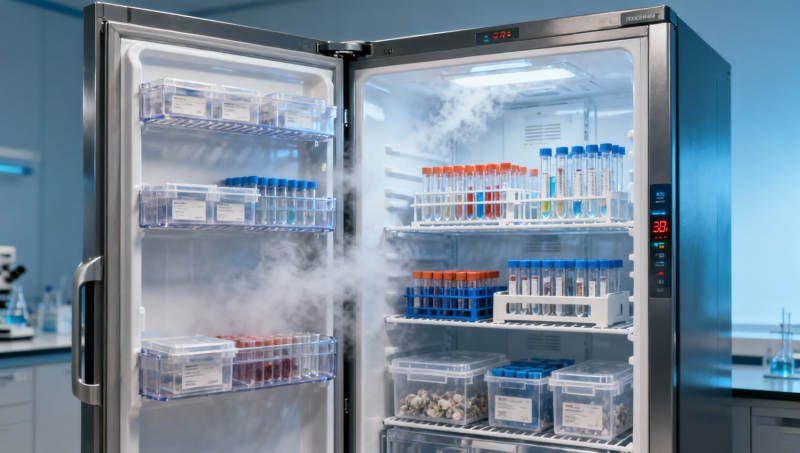
In regulated labs, freezer temperature recovery time is not a minor specification—it is a direct control point for sample protection. If a freezer takes too long to return to its setpoint after door openings, inventory loading, defrost events, or brief power disturbances, samples may be exposed to repeated thermal stress that is not always obvious in routine monitoring logs. For laboratories handling biologics, reagents, vaccines, enzymes, plasma, tissues, or long-term research materials, that delay can affect stability, reproducibility, audit readiness, and ultimately cost. For operators, engineers, quality teams, and procurement leaders, understanding recovery time is essential when comparing equipment performance and deciding whether a unit is fit for critical storage.
Why freezer temperature recovery time matters more than many buyers expect
Freezer temperature recovery time refers to how quickly a unit returns to its target internal temperature after a disturbance. That disturbance may be as simple as a routine door opening, a rack change, a fresh sample load, or a short utility interruption. In practical terms, the recovery profile shows how long samples remain in a warmer-than-intended environment.
This matters because many sample types do not fail all at once. Instead, they degrade gradually through repeated exposure to temperature fluctuations. Even when a freezer eventually returns to the setpoint, the time spent outside the acceptable range may reduce sample viability, change analyte behavior, alter reagent performance, or compromise long-term study consistency.
For regulated environments, recovery performance also affects documentation and defensibility. A freezer that holds temperature well but recovers slowly after access events may appear acceptable on a datasheet while creating hidden operational risk in daily use.
What actually happens to samples during slow recovery
The main issue is not only peak temperature rise, but cumulative thermal exposure. A brief rise of a few degrees may be tolerable for some materials, while repeated or prolonged excursions can become damaging over time. Sensitive samples react differently depending on composition, packaging, storage duration, and downstream use.
Common consequences of poor recovery performance include:
- Reduced cell viability in cryopreserved or partially temperature-sensitive materials
- Loss of enzymatic activity in biological reagents
- Protein instability, denaturation, or aggregation
- Drift in calibration controls and diagnostic reference materials
- Accelerated degradation of high-value research inventories
- Questionable chain-of-custody or quality records during audits
Not all damage is immediately visible. A sample may pass a visual check and still produce inconsistent assay results later. That is why freezer performance should be evaluated not only by nominal temperature, but by how the unit behaves under real operating conditions.
Which readers should care most about recovery speed
Different stakeholders care about freezer temperature recovery time for different reasons, but the concern is shared across technical and business functions.
- Operators and lab users need stable storage that tolerates normal workflow without frequent alarms or hidden sample exposure.
- Quality and safety personnel need evidence that temperature control supports compliance, deviation investigation, and risk reduction.
- Technical evaluators and engineers need measurable performance criteria for equipment comparison, validation, and site planning.
- Procurement teams need to distinguish between headline specifications and practical life-cycle value.
- Business and executive decision-makers need to understand the cost of sample loss, downtime, nonconformance, and replacement.
- Service and maintenance teams need to identify whether slow recovery points to airflow issues, gasket wear, sensor problems, refrigerant performance, or loading practices.
In short, recovery time affects both sample integrity and asset performance, making it relevant well beyond the lab bench.
What causes poor freezer temperature recovery time
Slow recovery is usually the result of multiple design and usage factors, not one isolated fault. Understanding these factors helps teams evaluate equipment more accurately and improve day-to-day performance.
Key contributors include:
- Insulation quality: Better insulation slows heat gain during door openings and interruptions.
- Compressor and refrigeration system capacity: Recovery depends on how efficiently the unit can remove introduced heat.
- Airflow design: Internal circulation strongly affects temperature uniformity and post-access stabilization.
- Door seal condition: Worn or damaged gaskets increase heat infiltration.
- Shelf, rack, and inventory density: Overloading can obstruct airflow and delay recovery.
- Door opening frequency and duration: High-use workflows create repeated thermal disturbance.
- Ambient room conditions: Warm installation environments increase system burden.
- Maintenance quality: Dirty condensers, fan issues, sensor drift, and neglected preventive service all impair performance.
In high-throughput labs, even a technically sound freezer may recover poorly if workflow design is not aligned with storage capacity and access patterns.
How to evaluate recovery performance when comparing freezers
If you are involved in equipment selection, do not stop at the setpoint range or cabinet volume. A more useful evaluation asks how the freezer performs after realistic disturbances. This is especially important for procurement directors and technical assessors comparing premium systems with lower-cost alternatives.
Look for the following:
- Recovery time after door opening: Ask for test conditions, not just the result.
- Temperature uniformity: A freezer may recover at one sensor location while other areas remain elevated.
- Loaded vs. unloaded performance: Empty-cabinet tests often do not reflect operational reality.
- Alarm response and logging resolution: Fine-grained monitoring helps reveal hidden excursions.
- Defrost behavior: For applicable models, understand temperature impact during and after the cycle.
- Power-failure holdover and restart recovery: Critical for risk management and emergency preparedness.
- Standards alignment and validation support: Useful for GMP, GLP, hospital, and accredited laboratory environments.
When suppliers provide performance claims, ask how they were measured, what ambient conditions were used, how many door openings were simulated, and whether the cabinet was fully loaded with representative mass.
Why real-world testing matters more than brochure specifications
Many freezer specifications are generated under controlled conditions that do not represent daily lab use. A unit may perform well in a clean factory test and underperform in a busy clinical, research, or biobank setting. The gap often appears in recovery time, temperature mapping, and event-based stability.
Real-world validation should include:
- Typical room temperature and HVAC variation
- Actual access frequency by staff
- Representative inventory load and packaging format
- Peak workflow periods
- Sensor placement across multiple cabinet zones
- Verification after maintenance or relocation
This approach is similar to how labs assess other critical instruments. Just as teams review cell counter viability accuracy or spectrophotometer wavelength accuracy using application-relevant criteria, freezer recovery should be judged by actual sample protection outcomes, not by isolated marketing numbers.
How slow recovery creates hidden compliance and cost risk
Sample damage is only one part of the issue. Slow freezer temperature recovery time can create broader operational and financial consequences:
- Repeat testing and delayed project timelines
- Loss of irreplaceable clinical or research specimens
- Deviation reports, CAPA burden, and audit findings
- Higher staff time spent handling alarms and investigations
- Reduced trust in stored controls, standards, and retained materials
- Unexpected replacement or service costs
For enterprise decision-makers, this reframes freezer selection from a simple capital purchase to a risk-adjusted infrastructure decision. A lower upfront price may not be economical if poor recovery contributes to inventory loss, compliance exposure, or unstable workflows.
What operators can do to improve recovery performance in daily use
Even without replacing equipment, labs can often improve recovery behavior through better operating practice.
- Reduce door-open time by organizing inventory for fast retrieval
- Use location maps or digital inventory systems
- Avoid overloading shelves or blocking internal airflow
- Group access tasks rather than opening the door repeatedly
- Verify door closure and inspect gaskets routinely
- Monitor temperature trends, not just alarm events
- Schedule preventive maintenance and condenser cleaning
- Review freezer placement relative to room heat sources and ventilation clearance
These measures do not replace sound equipment design, but they can significantly reduce thermal disturbance and support more consistent sample protection.
Questions procurement and quality teams should ask suppliers
To make an evidence-based decision, procurement and QA teams should push beyond generic claims. Useful supplier questions include:
- What is the documented freezer temperature recovery time after a defined door opening event?
- What loading condition was used during testing?
- How is temperature measured—single probe or multi-point mapping?
- What is the worst-case recovery zone inside the cabinet?
- How does the unit perform after short power interruptions?
- What service intervals are recommended to maintain recovery performance?
- What compliance, calibration, and validation documentation is available?
- Are there customer references from similar laboratory environments?
These questions help separate acceptable cold storage from storage that is truly suitable for critical sample stewardship.
Bottom line: recovery time is a sample protection metric, not just a freezer spec
Why does freezer temperature recovery time impact samples? Because every extra minute above the target storage condition increases the chance of cumulative thermal stress, degraded performance, compliance complexity, and avoidable cost. For sensitive materials, the difference between fast and slow recovery can determine whether stored inventory remains scientifically valid and operationally defensible.
For researchers, lab operators, technical evaluators, and procurement leaders, the right conclusion is clear: assess freezers by real recovery behavior under realistic conditions, not by setpoint claims alone. In modern medical and life sciences environments—where data integrity, regulatory alignment, and sample value are all high—temperature recovery time should be treated as a core decision criterion.
Recommended News
Metadata & Tools
Related Research
- Orthopedic Device Market Forecast: What Growth Drivers and Risks Matter Most?Orthopedic device market forecast insights: explore key growth drivers, regulatory hurdles, pricing pressure, and segment risks shaping future demand and investment opportunities.
- Supply Chain Optimization for Manufacturers: How to Cut Lead Times Without Raising CostsSupply chain optimization for manufacturers starts by fixing real delays, supplier risk, and schedule instability—cut lead times, protect margins, and improve on-time delivery.
- What Does Green Shipping Mean for Exporters Facing Carbon Rules and Freight Costs?Green shipping is reshaping exporting as carbon rules and freight costs rise. Learn how it affects compliance, margins, market access, and resilient supply chain decisions.
- What Is Driving Digital Pathology Adoption in North America’s Clinical Labs?Digital pathology North America adoption is rising as clinical labs seek faster workflows, stronger quality control, easier collaboration, and future-ready precision medicine capabilities.
- What to Expect at a Consumer Electronics Exhibition: Key Trends and Buyer InsightsConsumer electronics exhibition insights: discover buyer trends in AI, repairability, ecosystems, pricing, and supply chain signals that reveal which products are built to scale.